
Why outdoor units need a cage in Gauteng
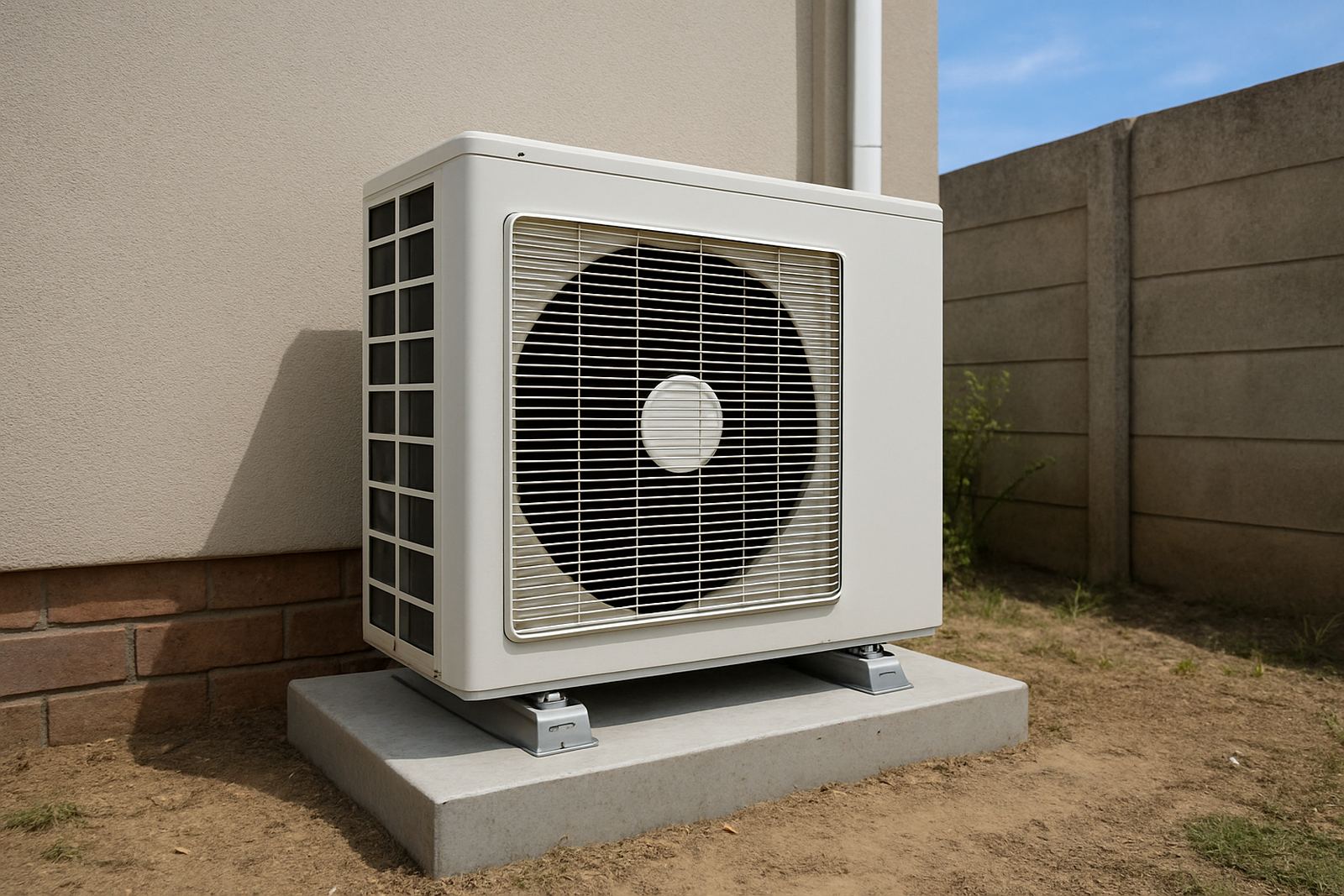
The outdoor unit is the most valuable thing on most air-conditioning installs that sits outside the house. Its coil is copper and aluminium, the pipes running to it are copper, and on a ducted system the condenser alone can be a large part of the job cost. In Johannesburg and Pretoria we regularly get calls from clients whose unit was cut loose overnight, or who came home to find the pipes hacked off at the wall and the refrigerant gone.
When that happens the cost is more than a new condenser. The indoor unit may need flushing, the pipe run has to be replaced, the system is regassed and recommissioned, and the house or office goes without cooling in the meantime. A cage does not make theft impossible, but it turns a two-minute job into a noisy one with grinders and time, and that is usually enough to send people somewhere else.
It also helps with the everyday knocks. Dogs chewing cable, kids' balls, garden services with a weed eater and wheelie bins pushed into the fins all do damage that we see on service visits.
How the cage is made
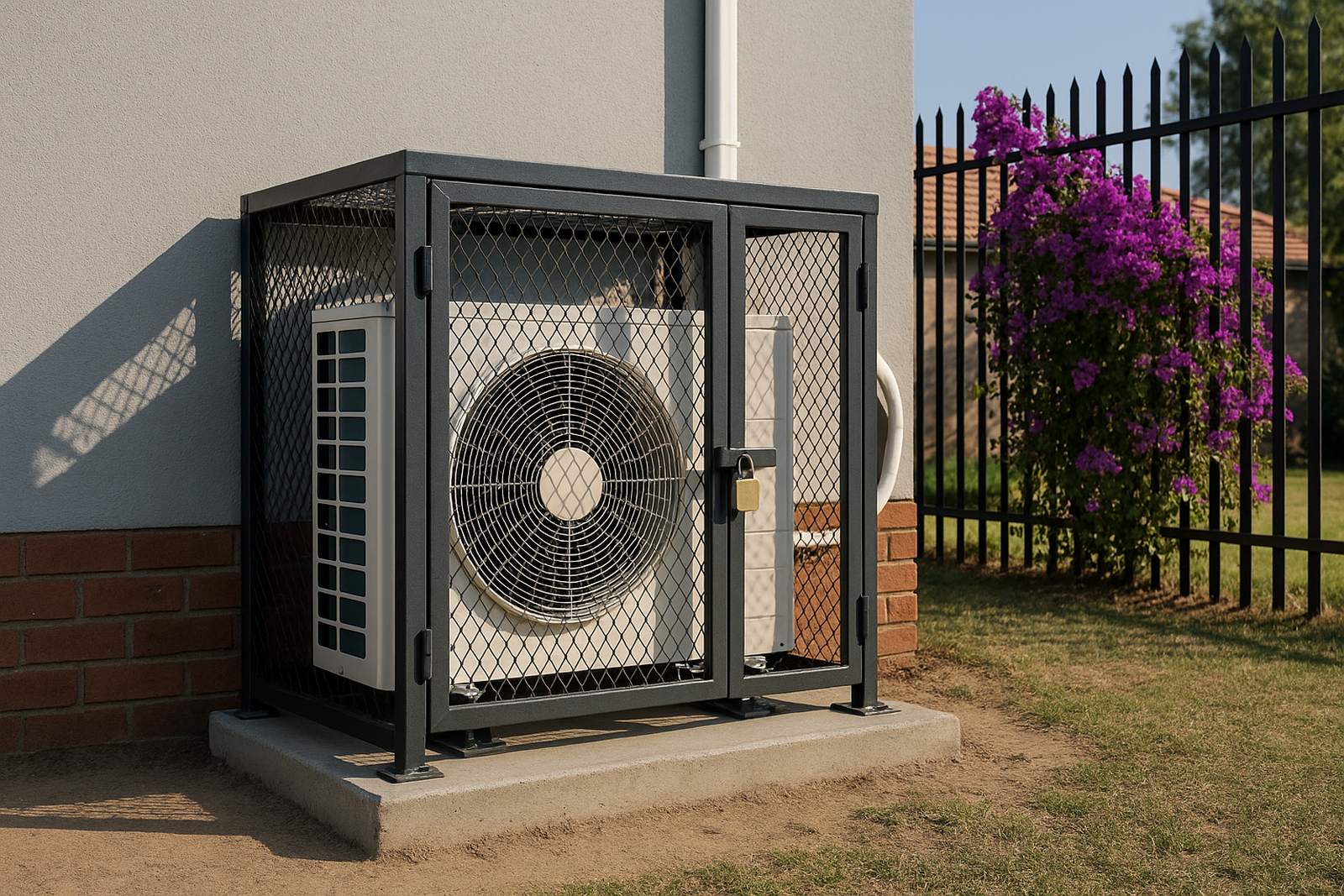
Each cage is built to the size of your unit and the space around it, not taken off a shelf. The frame is welded steel tube, the panels are welded anti-climb mesh with openings small enough that fingers and tools cannot get through, and the whole cage is hot-dip galvanised and then powder-coated in charcoal so it does not rust in the first rainy season.
On bracket-mounted units the cage is a box that bolts back into the wall. Where two or three condensers stand side by side on one plinth we often build one long cage with a door for each unit, which is neater and costs less than separate boxes.
Getting the airflow right
A badly made cage can cost you more in electricity than it saves. If the mesh is too fine, the cage is too tight or someone wraps it in shade cloth for looks, the condenser starts breathing its own hot air. Head pressure climbs, the compressor works harder, and on a 34 °C Pretoria afternoon the unit may trip out completely.
So we measure first. We look at which way the unit discharges, how much room there is to the wall and the boundary, and the unit maker's clearance figures for that model. As a rule the coil sides get at least 150 mm to 300 mm of space inside the cage and the fan face stays open, with as much room in front of it as the site allows. For side-discharge units on the Highveld we can add a sloped mesh hail guard on top. We do not put a solid lid on a top-discharge unit.
If your unit is in a poor spot to begin with, like a narrow side passage or right against a hot wall, our note on outdoor unit location explains what to look at, and sometimes moving the unit during the same visit is the better fix.
Fitting, timing and what we need from you
Most cages are made in seven to ten working days after we have measured, and fitting takes about two to three hours per unit, including the anchors and the pipe cover. The system can usually stay running during the work. If we find a weak or cracked plinth we tell you before fitting, because a cage is only as strong as what it is bolted to.
To quote, send us a photo of the outdoor unit from the front and the side, a rough measurement of the unit (width, depth and height), whether it stands on the ground, a plinth or a wall bracket, and how far the pipes run up the wall. If you have a ducted heat pump outdoor unit or a few condensers together, mention the model numbers if you can read them off the label.
New installations can have the cage included from the start, and we plan the plinth size and position around it. On existing systems we often fit cages during seasonal servicing, when the technician is already on site and can check the unit before it is closed in.
Key facts
| Product type | Made-to-measure anti-theft cage for split and ducted aircon outdoor units |
|---|---|
| Construction | Welded steel tube frame, welded anti-climb mesh panels, hot-dip galvanised and powder-coated charcoal |
| Mounting | Ground or plinth with heavy anchors, or box cage bolted to the wall on bracket-mounted units |
| Access | Full-width hinged service door with shrouded hasp for a closed-shackle padlock |
| Airflow | Sized to the unit maker's clearances, usually 150 mm to 300 mm on coil sides, fan face kept open |
| Options | Lockable pipe and cable cover to about 2.4 m, sloped mesh hail guard, multi-unit cages |
| Lead time and fitting | Seven to ten working days after measuring; about two to three hours to fit per unit |
| Pricing | Quoted per site after photos or a measure |
| Coverage area | Johannesburg, Sandton, Randburg, Pretoria, Centurion and Pretoria East |