

A Johannesburg team with Pretoria reach
Airzone started in 2009 and has grown from a small local operation into a team that handles zoned air-conditioning work across Johannesburg, Sandton, Randburg, Pretoria, Centurion and Pretoria East. We are based in Johannesburg, but much of our work takes us across the Gauteng corridor, from family homes in quiet suburbs to busy offices with tight schedules and tenant access rules. That local spread matters because no two buildings behave the same, especially when you factor in heat gain, glazing, roof type and the way people actually use each room.
Our business has always been built around one clear idea: air-conditioning should suit the space, not force the space to suit the system. That means proper site assessments, good load calculations and a design that takes into account room use, ceiling voids, duct runs, insulation and how the building performs when the power is off and then comes back on. We do not rush that stage because a system that is planned correctly is easier to live with, cheaper to run and far less likely to give trouble later on.
Why zoned systems make sense in local conditions
Zoned air-conditioning is a practical choice for South African homes and offices where different rooms are used at different times. A main bedroom does not need the same airflow as a north-facing lounge at 3pm, and a boardroom is not used the same way as a reception area or open-plan office. With room-by-room dampers and smart thermostats, the system can direct cooled air where it is needed instead of treating the whole building as one big space.
In Johannesburg, highveld heat can build quickly in the afternoon. In Pretoria, long summer days can keep internal temperatures up well into the evening. Add load-shedding, some older electrical layouts and buildings that were never planned for modern comfort systems, and you need a setup that is sensible from the start. Zoned systems help owners manage use room by room, which is useful for households, guest rooms, meeting spaces and offices with changing occupancy.
- Better comfort control in individual rooms
- Lower wasted running time in unused areas
- Cleaner integration with smart thermostats and controls
- Useful for homes, offices and mixed-use buildings
How we plan each job from first visit to final handover
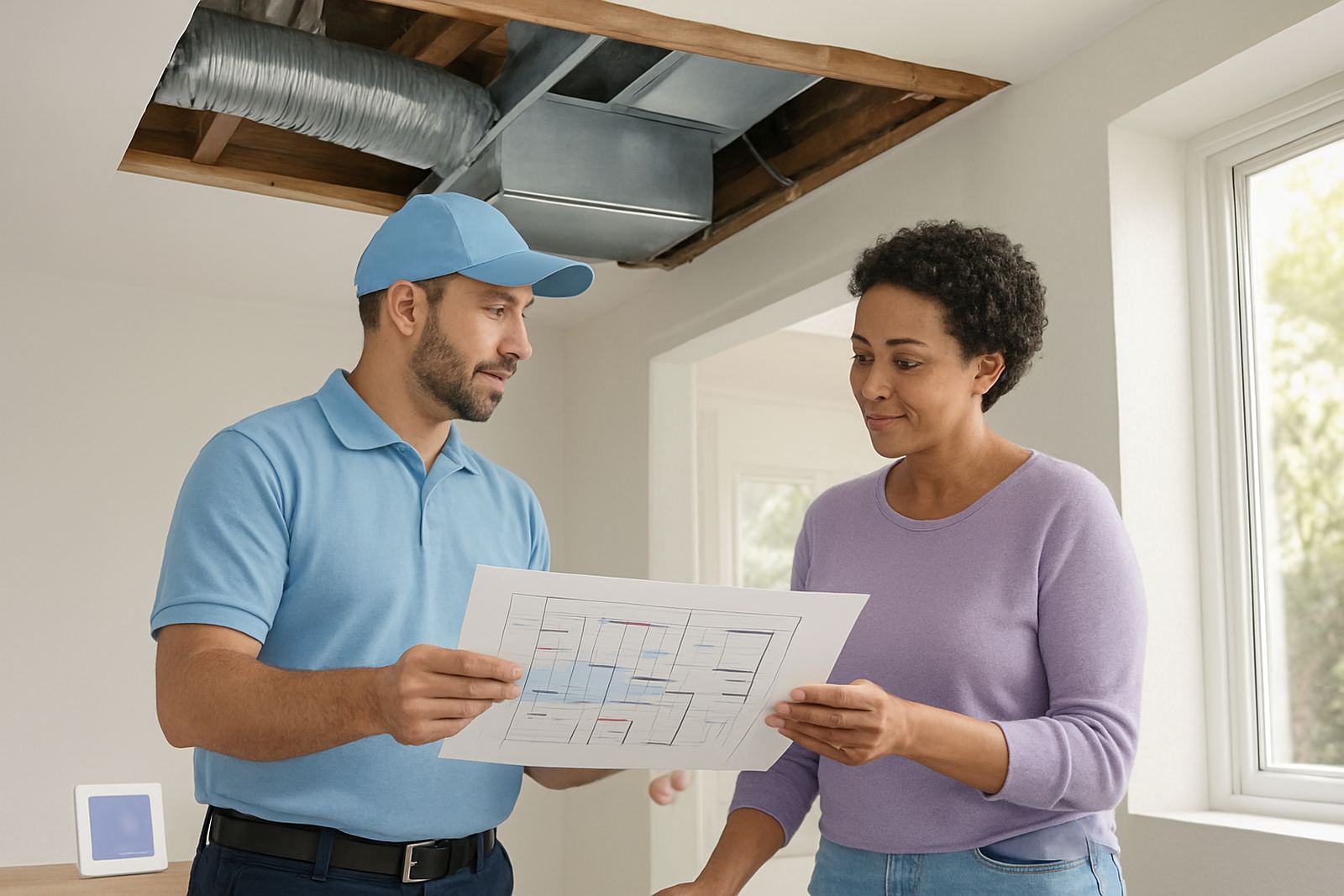
Our process starts with a site visit and a proper look at the building. Kagiso Dlamini, our Senior HVAC Designer, works through the room sizes, ceiling space, duct routes and thermal load so the system is sized correctly. That includes the basics people often skip, like solar gain on west-facing rooms, occupancy patterns, ceiling heights and whether the building can support the ducting and return air path without strain.
From there, we prepare the system design and controls plan, then move into installation with Reece Naidoo supervising the site work. We keep an eye on workmanship, alignment, access for maintenance and neat routing of pipework and cabling. Airflow balancing is checked once the system is in place, because a good design still has to perform properly in the real world. If the air does not move evenly, the room comfort will never feel right, no matter how good the equipment is.
- Site assessments and load calculations
- System design and duct layout planning
- Retrofit installations and new build installations
- Controls programming and airflow balancing
- Seasonal servicing, fault finding and system upgrades
The people who keep the work moving
Airzone is led by Ian Mokoena, our Managing Director, with support from a team that knows both the technical side and the customer side of the business. Naledi van Wyk manages operations, keeping schedules moving and jobs coordinated across different sites. Ayanda Khumalo handles service coordination, which matters when clients need prompt updates, access arrangements or a service visit around office hours and family routines.
Megan Pretorius leads customer support, so queries are handled clearly and without passing people around. We know that a client may not need technical language first they need a straight answer about what is happening, what it means, and what happens next. That is the way we prefer to work. Good communication keeps projects calm, especially on sites with other trades on the go or limited time for installation windows.
It also means that when a system needs attention later on, the same business relationship remains in place. Clients want someone who knows the building, remembers the controls setup and understands how the occupants use the space. That continuity helps with servicing, upgrades and troubleshooting, particularly where there are multiple zones and a mix of older and newer components.
What we stand for on every project
Our values are simple and practical. We believe in solid planning, neat work and systems that are easy to live with. We also believe in honesty about what a building needs, because not every property needs the biggest possible system. Sometimes a cleaner retrofit with better zoning is the smarter choice, and sometimes a new build design gives the best long term value.
We work with respect for the home or workplace. That means keeping sites tidy, protecting finishes where possible and leaving clear instructions once the work is complete. It also means taking municipal and building requirements seriously, particularly on commercial projects where access, noise, routing and compliance all need to be considered before the first cut is made. In coastal or humid conditions we also look closely at corrosion exposure and service access, even though our main work area is inland.
Service that continues after installation
Installation is only part of the picture. Air-conditioning needs seasonal servicing, occasional fault finding and sometimes upgrades as the building changes. Offices expand, families add rooms, tenants change, and older controls can stop matching how the space is used. We support clients with scheduled maintenance and practical repairs, so the system keeps doing its job year after year.
Our team also works on system upgrades where a property needs better control, improved airflow or a more efficient operating setup. In many cases, a well planned upgrade can extend the life of the existing installation and improve comfort without starting from scratch. That matters in Johannesburg and Pretoria, where buildings are often adapted over time and the original system no longer fits the way the space is used.
- Seasonal servicing before summer and winter peaks
- Fault finding for uneven cooling, control issues and airflow problems
- System upgrades for changing building layouts
- Support for homes, offices and retrofit projects
If you need a team that understands zoned air-conditioning and the day-to-day realities of Gauteng buildings, Airzone is set up for that work. We design carefully, install neatly and stay involved after handover so the system keeps performing as it should.