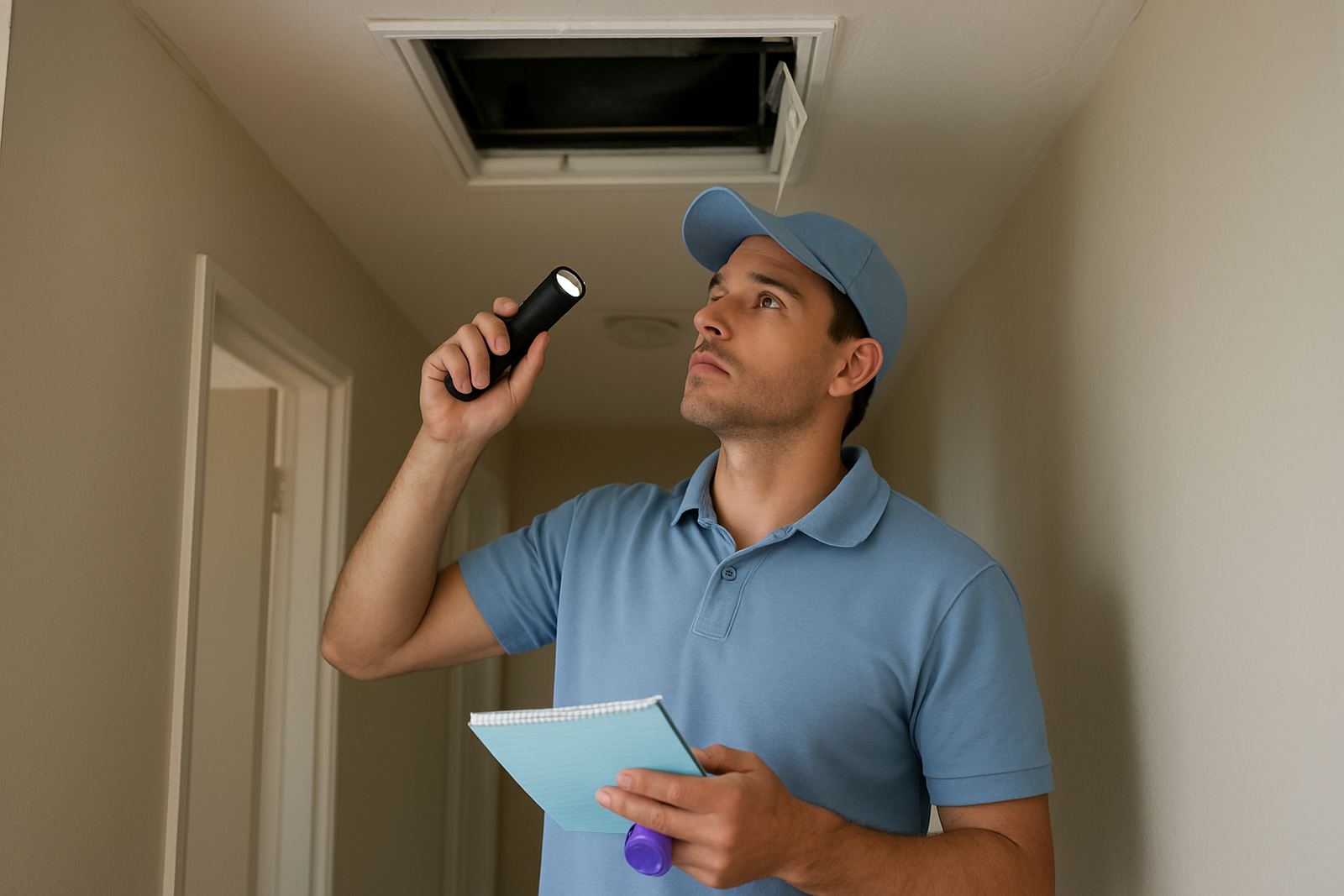
What happens on commissioning day
Commissioning is the first full run of the system under controlled conditions. Our team checks each indoor and outdoor unit, verifies the ductwork connections, confirms refrigerant pressures, and tests that every zone opens and closes as it should. We also check that supply and return air are moving through the right rooms, with no short cycling or odd noise from the ducts.
In Johannesburg and Pretoria homes, commissioning often happens with attention to heat gain from western sun, upstairs bedrooms, and rooms that close up during load-shedding. If the property has a generator or backup power arrangement, we test the restart sequence so the system comes back correctly after an outage. A good handover starts with the system working properly at the conditions you will actually live with.
Your training session on the controls
Once the system has passed the main tests, we walk you through the controls. That includes the thermostat, zone settings, temperature targets, fan modes, schedules, and any bypass or holiday functions. If you have more than one floor or a separate office area, we show how to manage each zone so no room is overcooled while another is left warm.
We keep the training practical. You should know how to change a setting, check a fault code, and reset the system after a power interruption. We also explain what is normal, such as a delay before cooling starts, and what needs a call-out, such as repeated tripping, weak airflow, or a damper that stays open when it should close.
- How to raise or lower the set temperature
- How to open or close individual zones
- How to use timer schedules and sleep settings
- What to do after an outage or surge event
- When to report a fault instead of adjusting the settings again
The final handover checklist
Before we leave site, we work through a written handover checklist with you or your representative. This helps avoid confusion later and gives you a clear record of what was installed, tested, and explained. For new builds in Pretoria East or retrofits in Sandton, this step is especially useful when other trades have been on site and details can get missed.
The checklist usually covers system models, zone names, thermostat locations, access panels, and service points. We also confirm where the isolators are, which ceiling areas need clear access, and which filters or components need regular attention. If there are building rules about access, noise, or after-hours maintenance, we note those too so future servicing goes smoothly.
- Serial and model details recorded
- Zone names confirmed room by room
- Filters and access panels identified
- Operation sheets and warranty papers handed over
- Any snag items listed for follow-up
How we test airflow and zone balance
A zoned system can only perform properly when airflow is balanced. During handover we measure whether each room is getting the right amount of conditioned air, not just whether the unit switches on. If a bedroom is cooling too quickly while a living area lags behind, we adjust the dampers, revisit the airflow settings, or review the duct layout.
This matters in offices as much as homes. A boardroom, reception and open-plan area often have different cooling needs, especially in buildings with glass frontage or server equipment nearby. We check that the system is not fighting itself, and that the pressure in the ducts stays within a practical range. That keeps noise down and helps the system last longer.
What documents you should receive
At the end of handover, you should have a clear file for the system. This normally includes the commissioning notes, user guide, maintenance schedule, and any relevant warranty information for the equipment and controls. If the job involved a retrofit, we also include any notes on duct modifications, damper positions, or access improvements made during installation.
Keep these documents together with your electrical contact details and service history. It makes later fault finding much faster, especially if you need support after a storm, surge or extended outage. In coastal humidity or dusty inland conditions, the paper trail matters because servicing intervals and filter care can change from one property to the next.
After handover: what to watch in the first few weeks
The first few weeks tell you a lot about how the system is settling in. A new system may need minor tweaks once the rooms are lived in, curtains are closed, or the office occupancy changes. If one room feels out of step with the others, we can revisit the zoning and make small adjustments rather than guessing.
Please keep an eye on these early signs:
- Uneven temperatures between rooms
- Unusual rattling, whistling or vibration
- Thermostats that do not match the room feel
- Condensation around grilles or ducts
- Repeated power loss issues after load-shedding
If anything does not seem right, report it early. A short call can prevent a larger service issue later, and it is better to sort out a minor setting problem before it becomes a bigger fault.