What the wired room sensor does in a zoned system
The wired room sensor is the part that tells a zoned air-conditioning system what the room is really doing, not what the return air in a passage or ceiling void happens to show. It gives the thermostat or zone controller a fixed, reliable reading from the space you actually want to control, which helps the system open, close, or modulate the damper at the right time.
In practice, that matters in homes with bedrooms that heat up late in the day, offices with glass frontage, and boardrooms that fill with people for short periods. A sensor mounted in the correct position can prevent short cycling, reduce temperature swings, and stop one room from stealing comfort from the others. It is a simple component, but in a properly designed system it makes the difference between a room that feels steady and one that keeps drifting 2 to 3 degrees off target.
Because it is hard-wired, it is not dependent on batteries or wireless signal strength. That is useful in busy buildings where there are load-shedding events, inverter changeovers, and plenty of metal between rooms and plant spaces. The sensor stays connected as part of the control circuit, so the zone logic keeps working as expected.
Where this sensor suits best
This sensor suits ducted systems with room-by-room dampers, especially where each zone needs its own temperature feedback. It is a good fit for family homes in Sandton, Randburg, Pretoria East, and Centurion, as well as offices in Johannesburg where each suite, meeting room, or open-plan section needs different operating hours.
It is also a practical choice for retrofit work. If a property already has ducted air-conditioning but the controls are not reading the occupied room accurately, adding a wired room sensor can improve day-to-day control without replacing the full system. That is often the case in homes where the original control point was placed near a sunny wall, or in offices where the sensor ended up too close to a doorway or printer area.
- Bedrooms and main living areas with strong sun exposure
- Meeting rooms, private offices, and client-facing spaces
- Open-plan areas split into separate comfort zones
- Upstairs rooms that run warmer than the ground floor
- Coastal or humid properties where stable control helps manage stickiness and condensation risk
In Gauteng, where a morning can start cool and move to hot by midday, the sensor helps the system react to real room conditions instead of chasing a general building average. That keeps the equipment from overworking, which can help with running costs over the long term.
Sizes, styles, and layout options
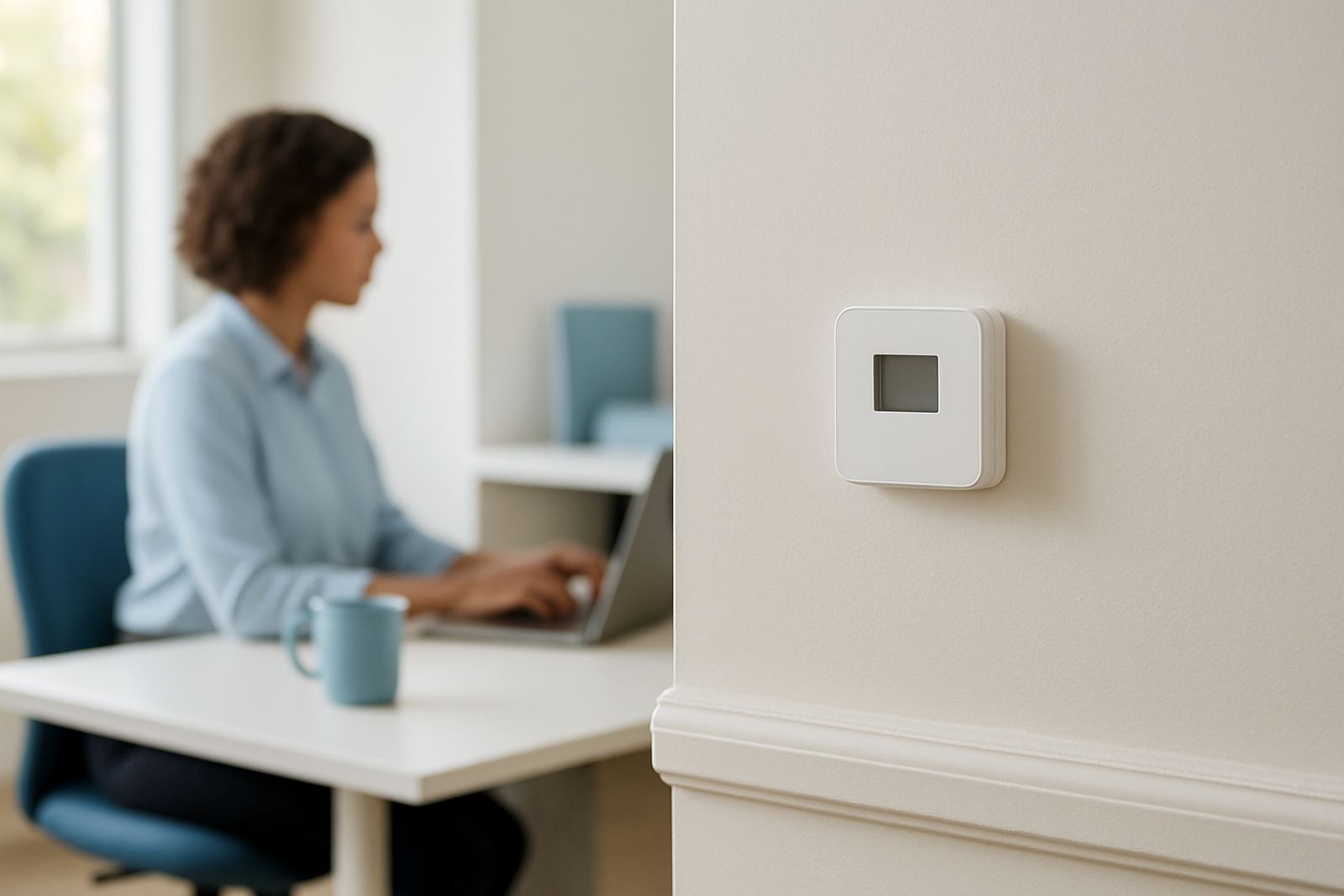
Wired room sensors are usually supplied in compact wall-mounted formats that sit neatly in a room without drawing attention. The common option is a flush or surface-mounted sensor head with a clear temperature pickup point, paired to the zone controller through low-voltage cabling. In some layouts, a decorative faceplate or matching wall plate is used so the sensor sits in line with the rest of the interior fittings.
When ordering, the main question is not only the size of the sensor itself, but also where it needs to sit and how the cable will be routed. A bedroom sensor may need a simple wall position, while a boardroom may need a more visible position that is easy to read and easy to service later. Depending on the system, the sensor can work as a room temperature input only, or as part of a larger wall control arrangement with setpoint adjustment and mode selection.
- Wall-mounted room sensor for standard zone feedback
- Flush finish for neat interior installations
- Surface mount option where chasing the wall is not practical
- Sensor plus thermostat interface for user adjustment
- Single-room or multi-zone pairing, depending on controller type
For larger projects, the layout should be planned together with the ductwork and damper positions. A sensor placed too close to a supply grille, TV, or kitchen heat source will read the room wrong. That sort of detail sounds small, but it is what keeps the zoning honest.
Installation, wiring, and power needs
The wired room sensor needs a proper low-voltage control connection back to the zone system or thermostat module. It does not need gas, and it does not run as a stand-alone appliance. Power is normally supplied through the controller or connected controls, which keeps the installation neat and avoids battery changes. On most projects the work is done together with the damper wiring and thermostat cabling, so the installer can test the full zone response in one visit.
Good installation starts with the sensor position. It should be away from direct sunlight, extraction grilles, appliances, and exterior walls that get too warm or too cold. For best readings, it is usually set at standard wall height and clear of curtains or shelving. If the room has a feature wall, bulkhead, or a lot of glass, the designer may shift the position slightly to get a more honest reading.
In homes with inverter backup or generator supply, the sensor remains part of the low-voltage control circuit, so it is not affected by local battery changeovers in the same way as plug-in electronics. In offices, this helps after load-shedding because the system can resume zone control once the plant is back online, instead of needing a person to reset each room. Proper cable management also matters, since loose signal cable near power runs can create faults or erratic readings.
For new builds, the sensor is best included at the design stage so the cable routes are hidden and the room layout is taken into account. In retrofits, access panels, ceiling space, and wall finish all need to be checked before the installer starts. It saves a lot of hassle later if the sensor point is agreed before paint goes on.
Care, seasonal servicing, and common faults
The sensor itself needs very little day-to-day attention, but it works best when the room around it is kept sensible. Dust buildup, blocked grilles, or furniture pushed hard against the wall can affect how quickly the sensor responds. During seasonal servicing, the technician should check the sensor reading against the controller, confirm the zone logic, and make sure the cable terminations are still tight.
Common issues include a sensor mounted in the wrong position, a loose connection, damaged cable, or a reading that is being influenced by another heat source. If a room suddenly feels warmer or colder than the display suggests, the first thing to check is often the sensor placement before blaming the damper or the compressor. On a few jobs the real issue is simply that the sensor is reading the hall, not the room people are sitting in.
- Keep the area around the sensor clear of curtains and furniture
- Check for dust build-up during regular HVAC servicing
- Test the reading after any repainting or renovation work
- Ask for a zoning check if the room starts overshooting or lagging
In coastal parts of the region or in houses with high humidity, the sensor should be checked together with condensate drainage and airflow settings. A room that feels sticky is not always a sensor fault, but the control point still needs to be accurate if the system is going to handle it properly.
What to confirm before you order
Before ordering a wired room sensor, confirm the system type, the controller model, and whether the sensor is being used as a simple temperature input or as part of a fuller wall control package. The installer should also check how many zones are being managed, whether the project is new build or retrofit, and if the room needs a flush or surface finish. These details affect both the cable requirements and the final look on the wall.
It also helps to know the room use. A main bedroom, a rental flat, and a manager’s office may all need different control behaviour. Some rooms benefit from tighter temperature control, while others only need a reliable reading for the zone damper to respond correctly. If the room has heavy glazing, higher occupancy, or long afternoon sun, say so up front so the sensor position can be planned properly.
For projects in Johannesburg and Pretoria, local conditions matter too. Double glazing, west-facing windows, and summer storms can all change how a room behaves through the day. A good order includes the room dimensions, ceiling type, where the wall control will sit, and any special finish requirements. That kind of information helps avoid call-backs and gets the first fix right, which is always better than chasing faults after handover.
When a wired sensor is the better choice
A wired room sensor is the better choice where reliability matters more than quick fitment. It suits properties that need steady control, where wireless signal can be interrupted, or where the owner wants a tidy permanent installation that will not rely on battery changes. For offices and family homes alike, it gives the zone system a stable reference point and makes the whole setup easier to trust day after day.
If you are planning a new ducted system or improving an existing one, the sensor should be considered together with the dampers, thermostat logic, and airflow balancing. That is where the best results come from, because the room sensor is only as good as the system around it. When everything is matched properly, the room reaches setpoint faster, holds it better, and uses the equipment with less strain. It is a small part, but it carries a lot of weight.
Key facts
| Product type | Hard-wired room temperature sensor |
|---|---|
| Use | Zone temperature feedback for ducted air-conditioning |
| Connection | Low-voltage wired control connection |
| Power requirement | Powered through the control system, no batteries |
| Installation | Wall-mounted, flush or surface option depending on project |
| Typical application | Homes, offices, meeting rooms, bedrooms, and zoned spaces |