What a UV coil module does in a ducted system
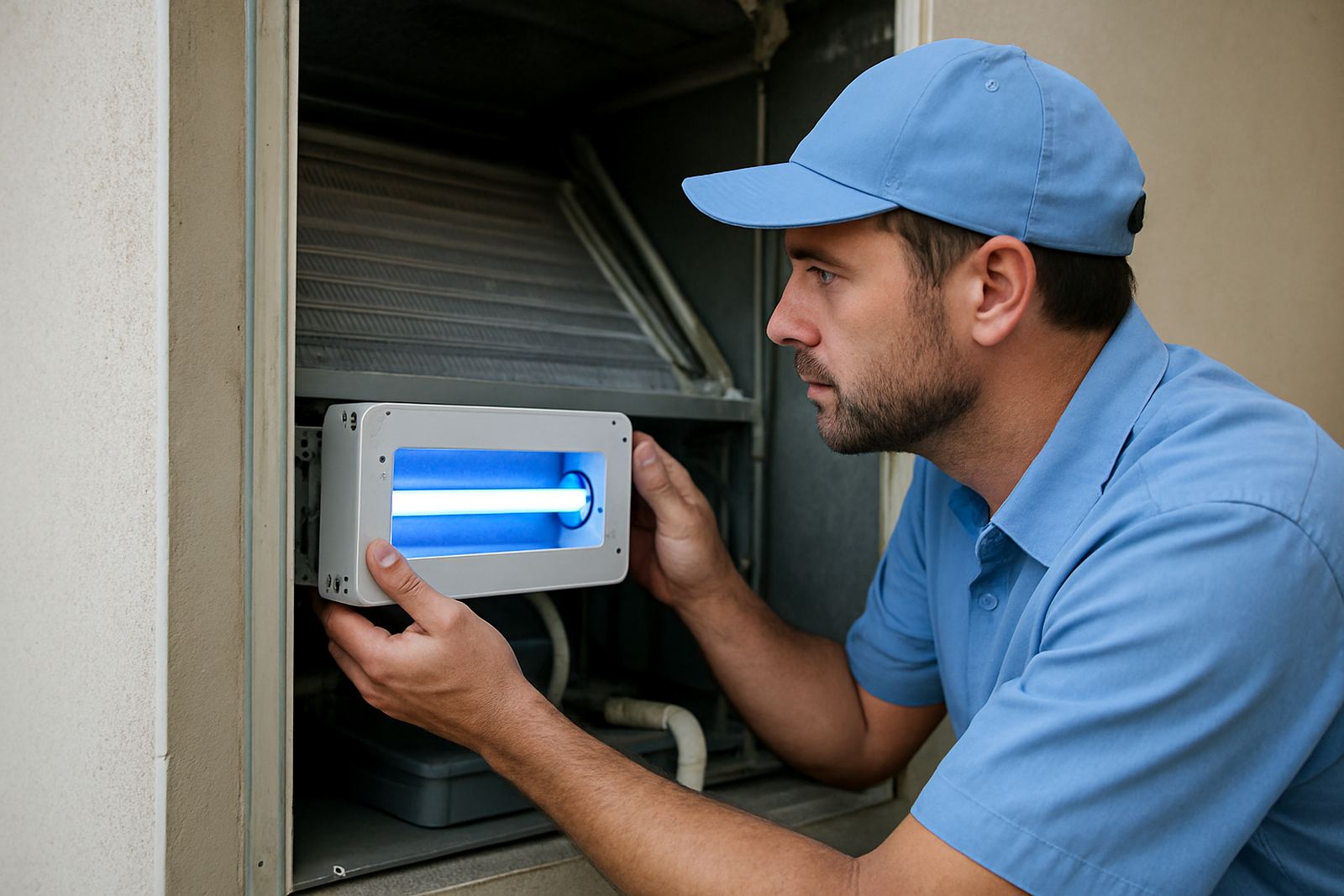
A UV coil module uses ultraviolet light positioned near the coil and drain pan area to help limit biological build-up on the wet surfaces inside the air handler. In plain terms, it supports cleaner coil conditions where condensation forms, which is common in Johannesburg offices, Pretoria homes and anywhere a system runs for long hours in warm weather.
It is not a replacement for filters or regular servicing, and it does not remove dust from the air on its own. What it does is work at the coil level, helping reduce the conditions that can lead to musty smells, sticky fins and faster fouling. For clients in coastal or humid environments, or places where the unit is switched on daily, that extra layer can make routine maintenance easier.
- Positioned beside the coil, not in the occupied room
- Works continuously when the system is running or on a set schedule
- Supports cleaner internal surfaces between services
- Useful where access to the indoor unit is limited
Sizes, lamp types and control options
UV modules are selected to match the size of the indoor unit, the depth of the coil section and the available mounting space. Smaller residential ducted systems may only need a single lamp module, while larger office handlers can require two lamps or a longer lamp body for better coverage across the coil face. The installer must also leave enough clearance for lamp removal and future servicing.
Most modules are supplied with a fixed mounting bracket and an external safety switch or viewing port. Some include timer control, while others can be linked to the system controls so the UV lamp runs with the fan or compressor. Where the system already has smart thermostats or zoning controls, the module can usually be integrated without complicated changes.
- Single lamp modules for compact indoor units
- Dual lamp options for wider coils or higher airflow systems
- Low-profile housings for tight ceiling voids
- Timer, manual switch or system-linked control options
Where a UV coil module suits best
This product suits ducted air-conditioning systems that see regular use and where hygiene around the coil matters. It is a practical choice for boardrooms, reception areas, medical consulting rooms, family homes and light commercial premises with return air ducts. If a building is closed up for long periods, or the unit works through load shedding with generator backup, keeping the coil area cleaner can help the system restart more cleanly after downtime.
It is also useful in systems that have ongoing condensation or where the drain tray is slow to dry out between cycles. That includes upper-floor installations, ceiling void units and properties near the coast where moisture and salt in the air can add to maintenance demands. In Pretoria and Centurion, many clients ask for UV on systems that run long hours in winter heating mode as well, because the indoor unit still gets dusty and damp in spots.
- Homes with ducted supply and concealed indoor units
- Offices with zoning, variable occupancy and long run times
- Buildings where coil fouling leads to reduced airflow
- Properties with limited access for frequent deep cleaning
Installation, power supply and system fit
Installation is normally done inside the air handler section, close to the coil and drain pan, with the lamp aimed at the wet surfaces. The installer needs a suitable mounting point, enough space for safe lamp clearance and a power source that can be isolated for service. On many sites the module is wired into the indoor unit supply, though some models use a dedicated transformer or controller depending on voltage and control method.
Because UV light is harmful to eyes and skin, correct placement and access protection are essential. The unit must be installed so the light cannot be seen during normal operation, and access panels should stay sealed once the module is running. In a retrofit, the condition of the ductwork, insulation and drain line should also be checked because a UV module will not fix air leaks or blocked drainage. If the installation is cramped, the team should confirm the lamp can still be removed without stripping half the ceiling.
- Requires safe mounting near the coil, with protected access
- Needs a compatible electrical supply and isolator arrangement
- Works best where drain lines and access panels are in good order
- Should be coordinated with the air-conditioning controls if possible
Care, lamp life and seasonal servicing
UV lamps lose output over time even if the light still switches on, so the module needs scheduled inspection rather than waiting for failure. A typical service visit should include lamp condition, bracket tightness, wiring checks, access seal inspection and a look at the coil surface for dust build-up or staining. If the lamp is dirty, cracked or discoloured, replace it before peak summer demand.
For offices and busy homes in Gauteng, it is practical to pair UV checks with seasonal servicing before summer and again after the heavy-use period. That helps catch drain issues, blocked filters and low airflow before they turn into callouts. If the building relies on the system for long operating hours, set a reminder for lamp replacement according to the supplier interval, not just when the cooling feels weaker. A clean coil and healthy lamp is cheaper than chasing complaints later.
- Inspect lamp output and physical condition at service visits
- Clean around the module only with the power isolated
- Replace lamps on the recommended interval even if they still glow
- Check access panels, seals and drain lines at the same time
What to check before ordering a UV coil module
Before ordering, confirm the indoor unit size, coil face dimensions and available service space. Measure the width and depth of the air handler section, check where the drain pan sits and note whether the unit has one coil or multiple sections. If the system is zoned, make sure the UV location will still reach the active coil area when dampers close down part of the system.
It also helps to know the supply voltage, control preference and whether the unit is a new build or a retrofit. On older systems, the access opening may need to be enlarged or reworked, and the installer should confirm there is safe cable routing. Where dust load is heavy or the return air path is long, a UV module should be considered together with filtration and airflow balancing rather than on its own. That way the whole system is set up properly, not patched later.
- Indoor unit dimensions and coil width
- Available service clearance and access panel size
- Supply voltage and control method
- Need for retrofit brackets or extra cable routing
- Condition of filters, drain line and duct seals
Key facts
| Product type | UV module positioned near the cooling coil |
|---|---|
| Typical use | Hygiene support for ducted air-conditioning systems |
| Common supply | 230 V AC, subject to model |
| Controls | On/off, timer or system-linked control options |
| Lamp configuration | Single or dual lamp, depending on coil size |
| Application areas | Homes, offices, consulting rooms, boardrooms and light commercial spaces |