What a Supply Air Diffuser Does in a Zoned System
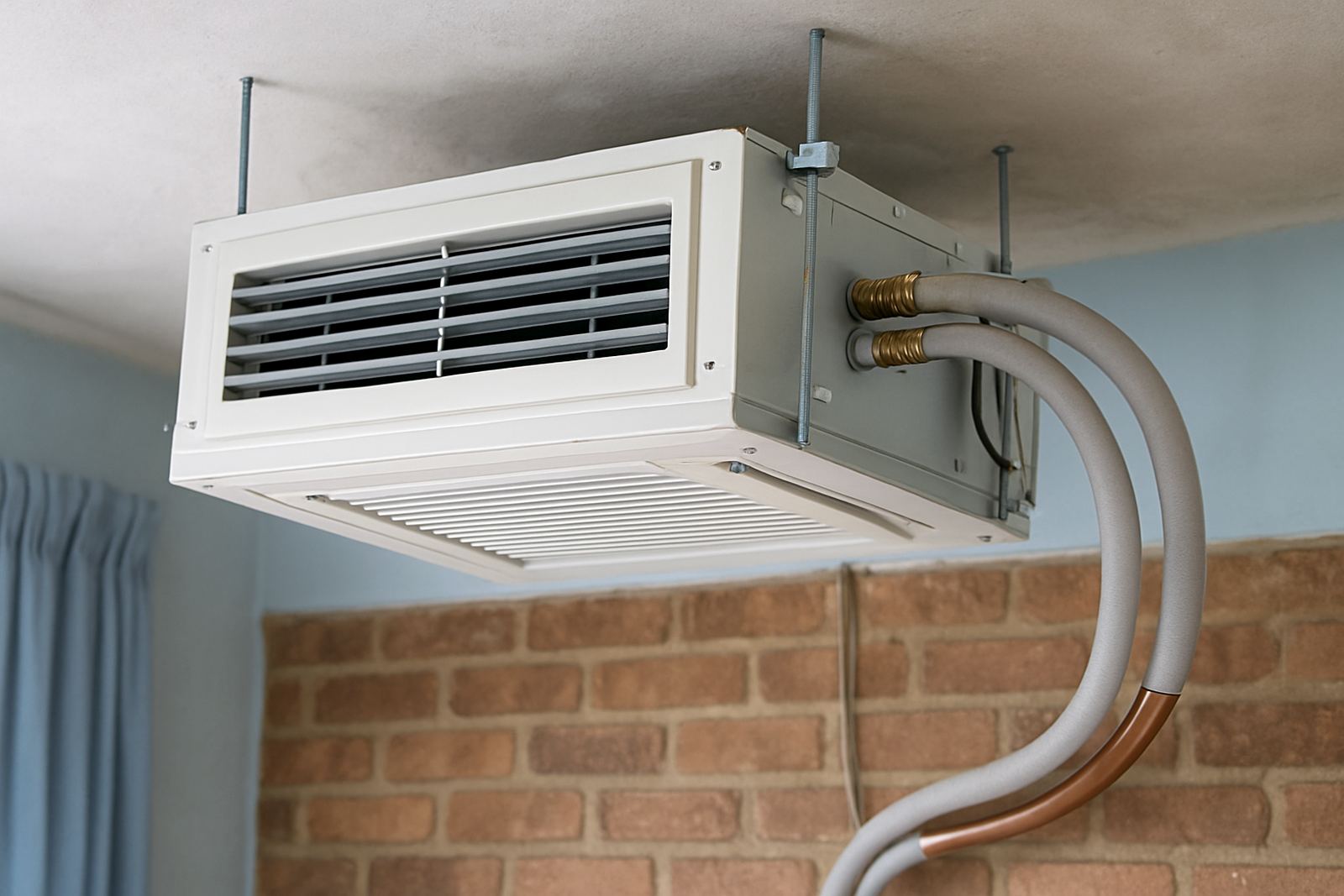
A supply air diffuser is fitted into the ceiling or bulkhead where air from a ducted system enters the room. Its job is to spread the air across the space so the temperature settles evenly and the room does not have one corner that feels over-cooled while the opposite side stays warm. In a zoned system this matters even more, because each room may call for different airflow at different times.
These units are used on homes, offices, boardrooms, retail back offices and consulting rooms where the finish needs to stay neat. The grille face stays low profile and the internal pattern is designed for directional throw, so the room gets air circulation without the harsh blast some people complain about. In higher ceilings or open plan areas, diffuser choice has a direct effect on comfort and noise.
- Even air distribution across the room
- Works with ducted split or packaged systems
- Suitable for single rooms or full zoned layouts
- Can be matched to ceiling colour for a discreet look
Sizes, Neck Options and Face Styles
Diffusers are selected by the amount of air the room needs, the duct size and the ceiling layout. Common sizes are 300 mm, 400 mm and 600 mm square face units, with circular and rectangular necks depending on the duct connection. For larger rooms or offices, a larger face helps keep air velocity lower and the room quieter. For smaller rooms, a compact diffuser may be the better fit.
The face style can be chosen for a tighter directional throw or for a softer spread. Some rooms need the air directed away from people sitting underneath, while others need the air to travel further across the room. That choice depends on the room shape, supply temperature and where the furniture ends up after fitout.
- Square, round and linear face options
- Common neck sizes from 150 mm to 400 mm
- Single or multi-direction throw patterns
- Powder coated finish available in standard colours
On most jobs we check the duct size, ceiling void depth and the return air layout before confirming the diffuser type. That saves time on site and avoids a situation where the diffuser is too small for the airflow, or too large for the ceiling opening.
Where It Suits Best in Johannesburg and Pretoria
Supply diffusers suit bedrooms, lounges, kitchens, private offices, meeting rooms and reception areas. They are also a good choice in homes with open plan living where the ducted system has to move air across a wider area. In Pretoria East and Centurion, where many homes have double volume spaces, the diffuser selection has to allow for the extra ceiling height. In Sandton and central Johannesburg, offices often need a cleaner ceiling finish with controlled throw that does not disturb counters or meeting tables.
Coastal humidity is not the main issue in Gauteng, but dust, dry winter air and load shedding all affect comfort. When power comes back after an outage, a properly balanced diffuser helps the room recover faster because the air is spread properly. It is a small part, but it has a big effect on how the system feels day to day.
- Bedrooms and main living areas
- Private offices and boardrooms
- Consulting rooms and clinics
- Retail back-of-house and staff areas
Installation Requirements and System Checks
There is no gas or water supply needed for the diffuser itself, but it has to be matched correctly to the ducted air-conditioning system. The ceiling opening, duct branch, insulation and fixing method must all line up so the diffuser sits square and does not rattle. On new builds, it is best to place the diffuser positions early while ceilings are still open. On retrofits, access through the ceiling may be tighter and the existing duct route may need adjustment.
We normally check the following before installation:
- Duct size and branch length
- Required airflow in litres per second or cubic metres per hour
- Ceiling depth and available fixing space
- Throw direction and likely occupant positions
- Noise risk if the unit is oversized or undersized
When the diffuser is installed properly, the room gets even supply air without whistling or dead spots. If the opening is out by a few millimetres, or the duct is pulling against the face, the finish can look untidy and the airflow can be affected.
Care, Cleaning and Seasonal Servicing
Supply diffusers need very little day to day attention, but they should be cleaned when the ceiling gets dusty or when a room has been painted. Dust build up can reduce airflow a little and can leave marks around the face. A soft cloth and mild cleaner is usually enough. Do not use harsh chemicals on coated finishes, because they can damage the surface.
During seasonal servicing, the technician should check that the diffuser is still secure, the air pattern is not blocked and the damper setting has not shifted. In offices, where staff may move furniture or change partitions, airflow can become uneven over time. If a room starts to feel warmer on one side or noisier than before, it is worth checking the diffuser and the branch duct. Small issues can usually be corrected before they become a larger fault.
- Wipe dust away every few weeks
- Check after painting or ceiling work
- Inspect during winter and summer servicing
- Rebalance if furniture or partitions change
What to Check Before You Order
Before ordering a supply air diffuser, confirm the room size, ceiling type and how much air that zone actually needs. A diffuser should suit the system load, not just the room opening. If the system is being upgraded, the new diffuser may need to handle a different airflow rate from the old one. That is common in Johannesburg offices where meeting rooms are repurposed, or in homes where a spare room becomes a study.
Also check the finish colour, neck size, face size and whether the diffuser needs a fixed pattern or an adjustable one. If you are working with a bulkhead, slab or tight ceiling void, the depth matters too. It is a good idea to confirm the exact opening size before the ceiling board goes up, because changing it later means extra work and sometimes extra cost.
- Room dimensions and ceiling height
- Airflow requirement for the zone
- Neck size and duct connection
- Face size and finish colour
- Fixed or adjustable air throw pattern
- Access for future servicing
Why Airzone Supplies Diffusers with the Full Ducted System
At Airzone, we supply diffusers as part of the whole zoned air-conditioning design, not as a loose accessory. That means the diffuser choice is tied to load calculations, controls programming, airflow balancing and the practical reality of how the room is used. A nicely selected diffuser gives the system a better finish and helps the room perform as expected in summer, winter and during power interruptions.
Our Johannesburg base covers Sandton, Randburg, Pretoria, Centurion and Pretoria East. Whether it is a new build, a retrofit or a system upgrade, we can help match the diffuser to the space so the ceiling looks clean and the air moves properly. It is a small detail, but if it is wrong you notice it every day.
Key facts
| Product type | Ceiling supply air diffuser for ducted zoned air-conditioning |
|---|---|
| Common sizes | 300 mm, 400 mm and 600 mm square faces, plus round and linear options |
| Connection options | Circular or rectangular necks to suit duct branch sizes |
| Finish | Powder coated in standard colours, often matched to ceiling colour |
| Typical use | Homes, offices, meeting rooms, consulting rooms and open plan areas |
| Installation needs | Matched duct size, ceiling opening, insulation and airflow balancing |