

Schedule Control Module
Home / Systems / Schedule Control Module

Systems

Schedule Control Module

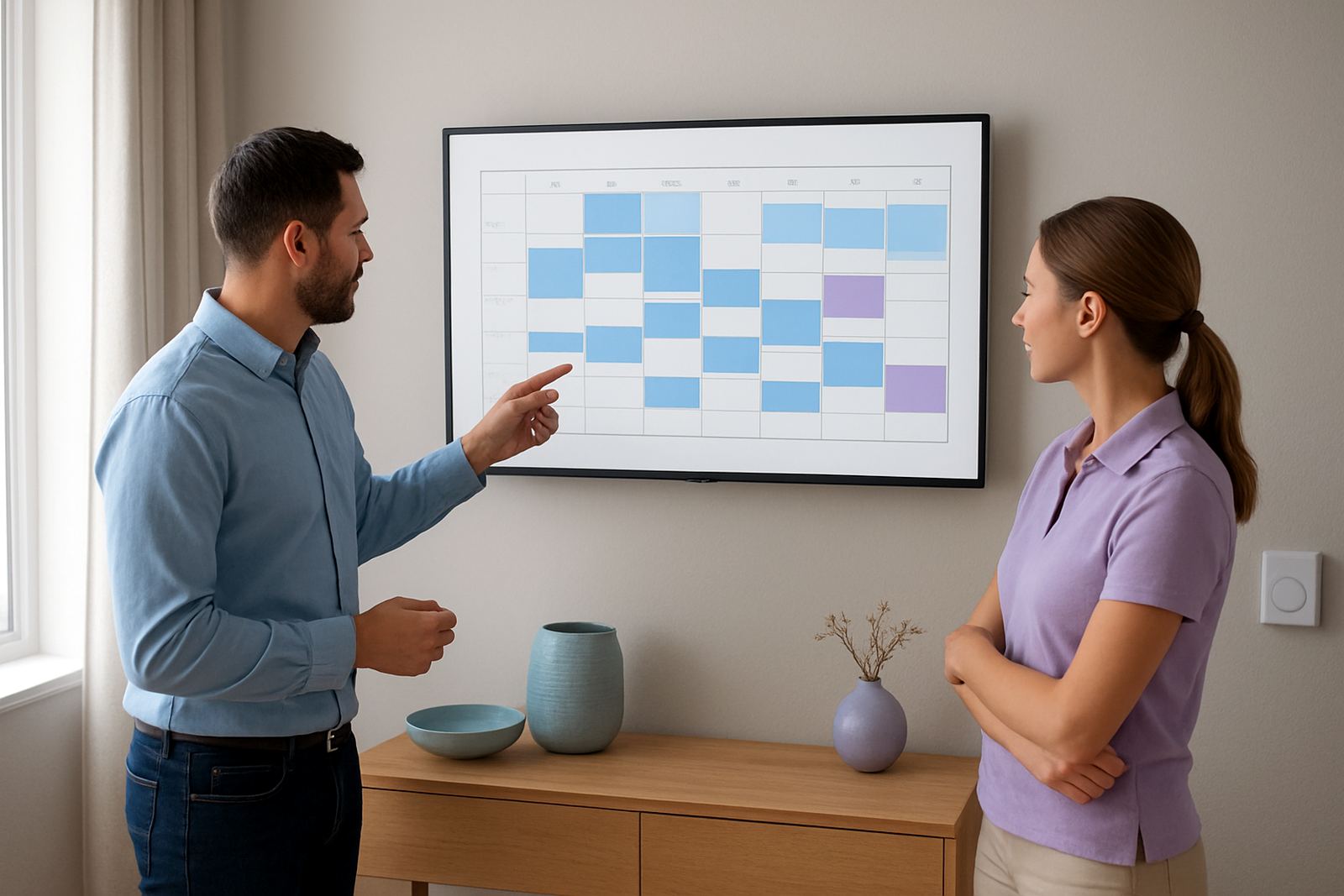
The Schedule Control Module lets you set timed occupancy patterns for homes and small offices, so each zone runs when it is actually needed. It works with ducted zoned air-conditioning and helps cut wasted runtime during school runs, meetings, after-hours and load-shedding recovery.

Timed control for rooms that are not used all day

The Schedule Control Module is a compact control add-on for zoned ducted air-conditioning. It is used to program heating and cooling by time of day, day of week and zone, so bedrooms, studies, boardrooms and reception areas are not being conditioned when empty. In Johannesburg and Pretoria this matters during long workdays, early mornings and the cooler winter evenings when only parts of a property need comfort.

The module suits homes, small offices and light commercial spaces that already have a zoned ducted system or are being planned for one. It gives you proper timed occupancy patterns instead of relying on people remembering to switch zones on and off. That saves energy and avoids the common problem of over cooling one area while another area sits unused.

  • Time based zone control for daily routines
  • Weekday and weekend scheduling
  • Useful for family homes, medical rooms and small offices
  • Works well where staff come and go at set times

Sizes and control options to match the installation

The module is usually selected to suit the number of zones on the ducted system and the type of thermostat control being used. For a two to four zone home setup, a smaller control arrangement is normally enough. For a larger house with a main bedroom wing, living areas and a study, or for a small office with several occupied rooms, the controls are laid out to manage each area separately.

Options can include a basic weekly schedule, holiday or setback periods, and local override functions for days when routines change. Some setups use a central scheduling point with room thermostats, while others tie the schedule into a wider building controls arrangement. We always check how the dampers, sensors and thermostats will talk to each other before finalising the order.

  • 2 to 8 zone applications commonly covered
  • Weekly schedules with manual override
  • Room by room timing where required
  • Can be paired with smart thermostats and duct dampers

Where it suits best in Johannesburg and Pretoria

This module suits properties with regular occupancy patterns and a need for better after hours control. In Sandton offices, it can keep meeting rooms and open-plan areas on separate time bands. In Pretoria East family homes, it is useful for school day routines, night cooling and weekend changes. In Randburg and Centurion, it works well in offices and homes where the owner wants one system to handle different zones without constant manual adjustment.

It is also practical for homes with upstairs bedrooms and downstairs living areas, or small offices with a reception, private office and training room. On coastal humidity is not the main concern in Gauteng, but dust, winter dryness and frequent door opening still affect comfort and airflow, so timed zone control helps the system run in a steadier pattern.

  • Homes with bedrooms and living areas on different schedules
  • Small offices with changing occupancy through the day
  • Consulting rooms, studios and reception spaces
  • Properties where energy use needs closer control

Installation needs, power supply and system checks

Installation is done as part of the zoned ducted air-conditioning control setup and should be planned with the main unit, dampers, thermostats and airflow requirements in mind. The module normally needs a stable electrical supply from the control side of the system, and it should be protected and wired by a qualified HVAC installer. If the property already has a system, we check compatibility first because some older installs need control upgrades or sensor changes.

There is no gas requirement for the scheduling module itself. If it is being added to an air-conditioning system that uses a separate refrigeration circuit, the installer still needs to confirm refrigerant piping, drainage and condensate fall are correct. In load-shedding areas, it is also worth checking how the controls restart after power returns so the schedule does not drift or come back on in the wrong zone.

  • Needs compatible zoned ducted air-conditioning hardware
  • Requires a proper electrical control connection
  • No gas supply needed for the module itself
  • Best installed with damper and thermostat commissioning

Keeping schedules accurate and the controls easy to live with

The module needs little day to day attention once the schedule is set, but it should still be checked during seasonal servicing. Dust in ceiling spaces, loose thermostat wiring and stuck dampers can cause a zone to miss its time window or run longer than intended. If the property has changed use, for example a bedroom becoming a home office, the schedule should be updated rather than left as it was.

Simple care makes a difference. Keep room sensors clear, avoid blocking return air paths and make sure occupants know how to use the temporary override function. A minor service visit can also confirm that the timers are holding correctly after outages and that airflow balancing has not shifted. It saves callouts later, and keeps the system behaving the way it should.

  • Check schedules at the change of season
  • Test after power cuts or load-shedding events
  • Inspect damper movement and sensor readings
  • Update settings when room use changes

What to confirm before you place an order

Before ordering, confirm the number of zones, the type of ducted system, the thermostat arrangement and the daily occupancy pattern. It also helps to know whether the property is a new build or a retrofit, because retrofit work may need extra cabling or a control enclosure adjustment. For offices in Pretoria or Johannesburg, check opening hours, staff levels and which rooms must stay active after hours.

We also recommend checking access to the ceiling space, electrical isolation points and where the main control panel will sit. If you are comparing options, ask for the schedule functions, override method, compatibility with your dampers and the power recovery settings after an outage. That way there are no surprises on site and the system can be set up properly from the start.

  • Number of zones and rooms to be scheduled
  • Existing ducted system or new installation
  • Required override and holiday settings
  • Control panel location and access for servicing

Key facts

Product typeScheduling control module for zoned ducted air-conditioning
Typical useTimed occupancy control for homes and small offices
Zone rangeUsually 2 to 8 zones, depending on system layout
PowerLow voltage control supply from compatible HVAC control system
Gas requirementNone for the module itself
Finish / mountingIndoor control module, panel or wall mounted interface depending on setup

What clients say

Questions we get asked

Does the Schedule Control Module work with an existing zoned system?

Yes, in many cases it can be added to an existing zoned ducted system if the dampers, thermostats and main control board are compatible. A site check is needed first.

Can I set different times for bedrooms and living areas?

Yes. That is one of the main uses. Bedrooms, living rooms and study areas can each follow their own schedule, which is useful for family routines.

What happens after load-shedding or a power cut?

The controls should be checked after any outage to make sure the schedule and zone settings have held correctly. A proper commissioning check helps prevent incorrect restart behaviour.

Planning something? Email the team.

design@airzone.co.za