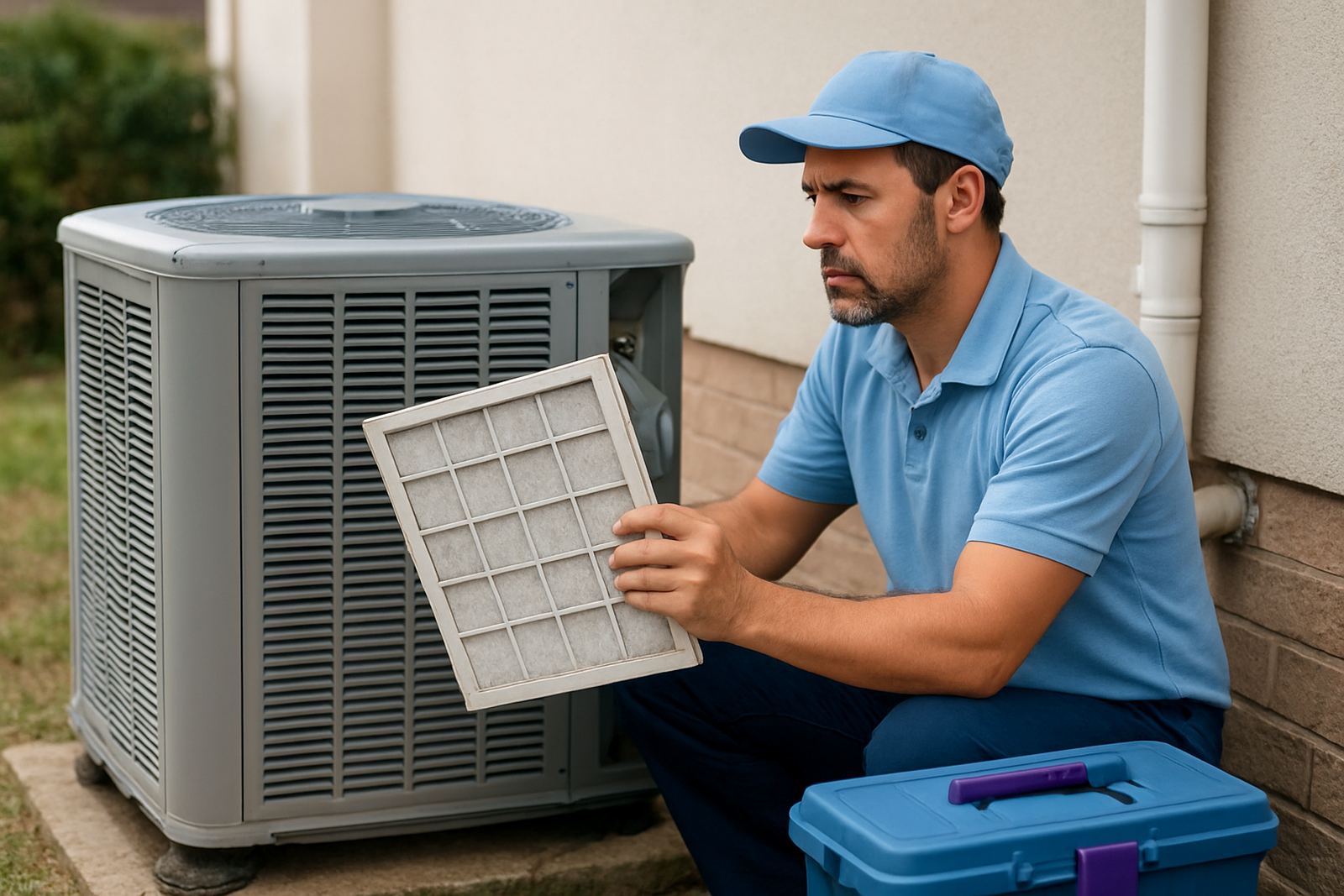
How often should a zoned system be serviced?
For most homes in Johannesburg, Sandton, Randburg and Pretoria, we recommend a full service once a year. If the property is busy, has open-plan areas with heavy use, or sits close to dust, construction or trees, six-monthly servicing is better. Coastal humidity is not a factor in Gauteng, but dust build-up, pollen and blocked returns can still affect airflow and the way each zone responds.
A proper service should cover the indoor unit, filters, dampers, thermostat checks, airflow testing and a visual inspection of drain lines and insulation. If the system is used daily for offices or home studies, do not wait for a fault before booking maintenance.
- Once a year for standard home use
- Every 6 months for high-use offices or dusty sites
- After any major renovation or ceiling work
- Before the hot season starts, not after it does
What can I clean myself between visits?
You can handle light cleaning yourself, but keep it simple. Wipe the thermostat screen with a dry soft cloth, remove dust from visible grilles and check that furniture, curtains or boxes are not blocking supply points. If a room is a lot warmer than the others, first look for blocked airflow before assuming there is a fault.
Never hose down internal parts or spray chemicals into grilles. Dust on accessible filters can usually be removed carefully with a vacuum or a gentle rinse, then left to dry fully before refitting. If you are unsure whether a cover, filter or grille is meant to come off, rather ask. Forcing clips or panels can lead to cracked housings and poor sealing.
- Keep thermostat vents clear
- Vacuum visible dust from returns and grilles
- Check that no curtains or cupboards block airflow
- Do not wet electrical components or control boxes
What should I do after load-shedding or a power cut?
After a power cut, switch the system back on in a steady order. First restore power at the main board if it was isolated. Then wait a few minutes before turning the system on again, especially if the compressor or control panel was interrupted mid-cycle. This gives the controls time to reset and helps prevent short cycling.
If you have separate room-by-room dampers, open the main occupied zones first. Once the system is running normally, bring other zones back one at a time. If the display shows an error after power returns, note the code if there is one and call for support. Repeated forced restarts can trip the system again, and that wastes time and money.
- Wait 3 to 5 minutes before restarting
- Bring zones back online one by one
- Listen for unusual humming, rattling or clicking
- Check the breaker if the unit stays dead
How do I use room-by-room zoning properly?
Zoning works best when each room is set for actual use, not the same setting everywhere. Bedrooms, boardrooms and lounges do not all need the same temperature. If one zone is closed too often, air pressure can shift and the system may become noisier or less even. That is why airflow balancing matters after a retrofit or layout change.
Set occupied rooms first, then adjust less-used areas. Avoid setting one zone very low and another very high at the same time, because the system will work harder than necessary. In winter, a steady set point is usually better than frequent big changes. If someone keeps overriding the thermostat in one room, check whether the space has extra heat from sunlight, server gear or appliances.
- Use sensible set points instead of constant changes
- Do not close every zone at once unless advised
- Balance use across living areas and private rooms
- Ask for a recheck if the building layout has changed
Warning signs that need a service call
Some issues can wait a day or two, but others need attention quickly. If a room takes much longer to cool than the rest, if the airflow has dropped sharply, or if the system starts short cycling, something in the controls or dampers may need checking. A dirty coil, loose sensor, blocked drain or damper fault can all show up this way.
Listen for new sounds. A light hum is normal, but scraping, repeated clicking, or a fan that starts and stops every few minutes is not. Water stains near a ceiling return, musty smells, or condensation around ducts should also be reported early, especially in offices where downtime affects more than one team.
- Uneven temperatures between zones
- Water dripping or ceiling marks
- Persistent error messages
- Weak airflow from several outlets at once
When should I arrange seasonal servicing?
Seasonal servicing is best done before the first long heat spell and again before winter if the system is used year-round. In Johannesburg and Pretoria, that often means booking ahead of the first big warm-up in spring and then checking the system again before colder mornings set in. Offices should plan ahead as well, because the first hot week usually exposes any weak points.
If you have had a retrofit, a new build installation, a control upgrade or an airflow adjustment, keep the first service earlier than normal. That gives the technician time to confirm that dampers, thermostat settings and room balancing are still correct after the system has settled in. A little prevention now avoids callouts later when everyone wants cooling at once.
- Book before peak summer demand
- Schedule after renovations or ceiling access work
- Check drainage before the rainy season
- Review controls after any tenant or layout change