Why office filters need a planned schedule
Office air-conditioning works harder than many people realise. In a shared building, one blocked filter can affect multiple rooms at once, especially where open-plan areas, meeting rooms and enclosed offices all rely on the same ducted system. Planned office filter maintenance keeps the airflow steady and helps the system hold temperature without overworking the fan or compressor.
In Johannesburg and Pretoria, dust from busy roads, construction activity and dry winter air can load filters faster than many teams expect. If a building also runs after-hours, has visitors moving through all day, or sits close to a major route, filters can need attention sooner than a once-a-year service. The point is not only cleanliness, it is keeping the system predictable so staff are not dealing with hot spots, uneven cooling or complaints from one side of the floor.
What we look for during a filter visit
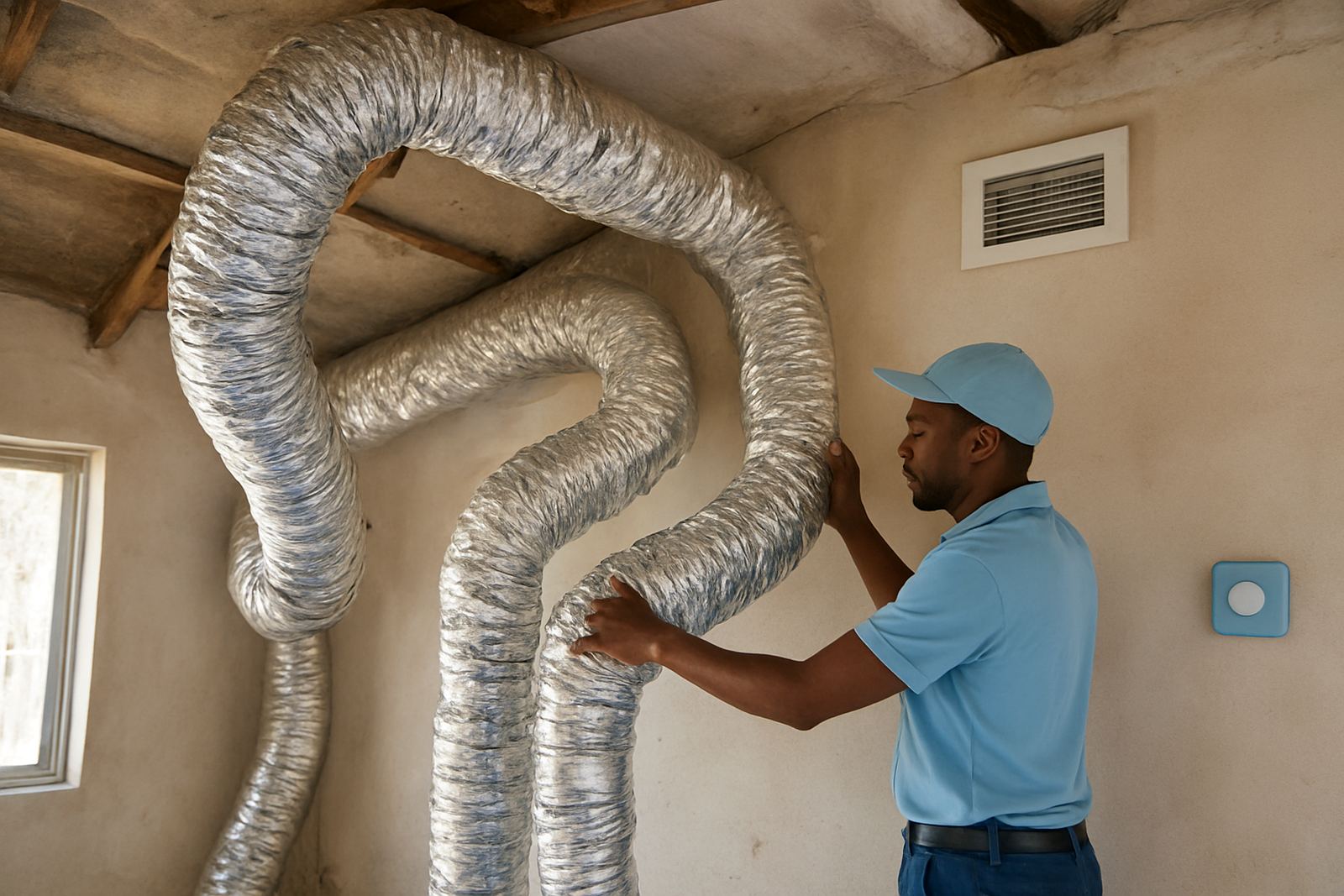
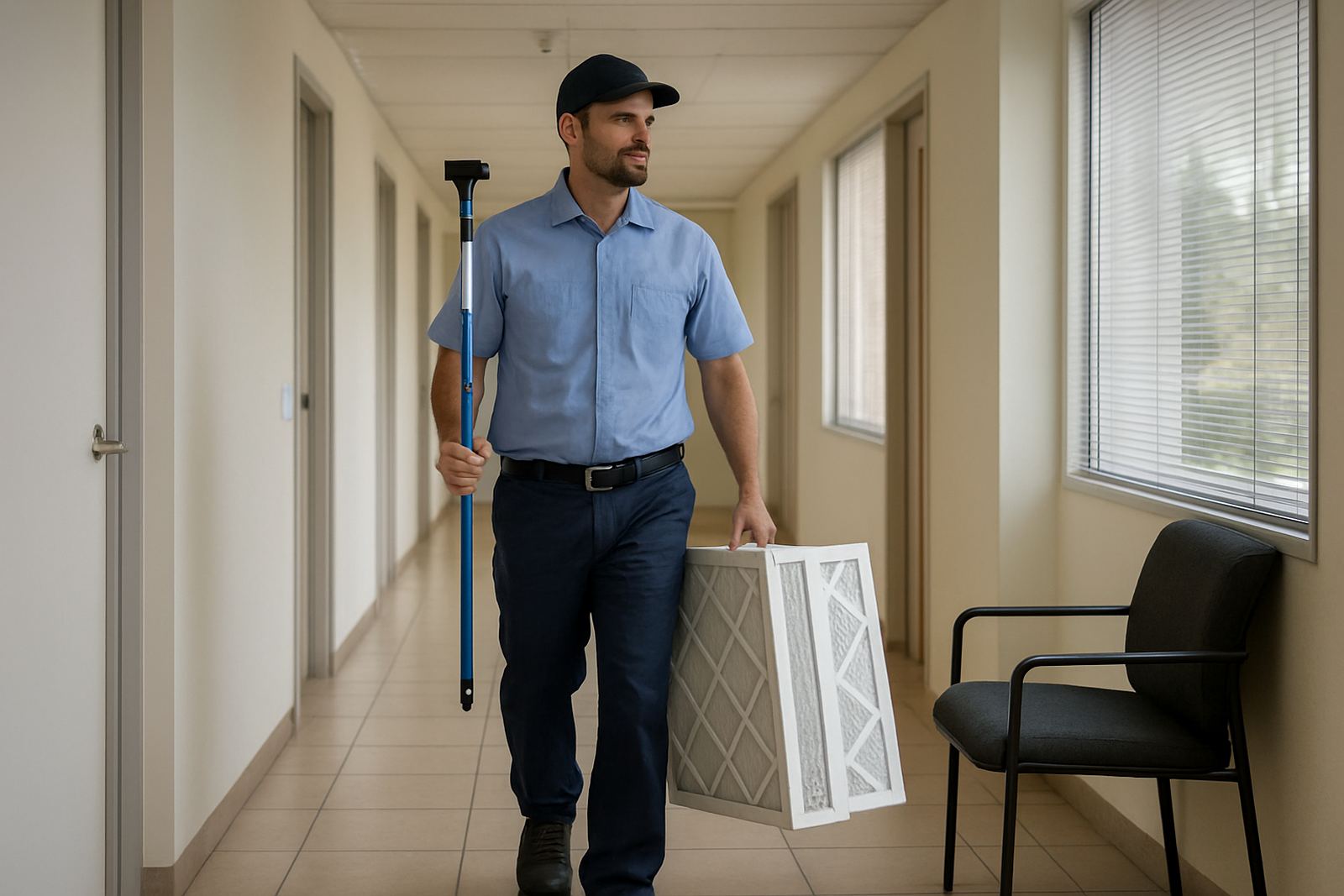
A proper filter visit is not just a quick swap and go. It starts with checking the condition of the return air path, the filter frame, the seals around the filter rack and the pressure drop across the set. If the filter is already bypassing dust, a clean replacement will not solve the full problem.
- Inspect filter loading and dust type, not just visible dirt
- Check for damaged frames, loose clips or gaps at the rack
- Confirm the air handler is not pulling in dust from a ceiling void or plant room
- Review whether the current filter grade suits the building use
- Record the date, condition and next due service
We also look at the pattern of use. A law office in Sandton with client traffic has different needs to a call centre in Centurion with long operating hours. If the building has been through a renovation, extra plaster dust can clog filters much faster for the first few months.
Signs the filters are overdue
Most office teams notice the comfort issue before they notice the cause. Staff may say the air feels stale, the office takes longer to cool down, or the temperature drifts from one zone to another. You may also hear the system running more often, with less actual cooling at the outlets. That is often a sign the filters are restricting airflow.
There are a few other clues worth acting on quickly:
- More dust settling on work surfaces soon after cleaning
- Reduced airflow at certain ceiling diffusers
- Unusual fan noise or higher energy use
- Odours that linger in meeting rooms or reception areas
- Frequent complaints from the same occupied zones
If the building uses zoned control, dirty filters can make the control system look like the issue is with thermostats or dampers when the real problem is much simpler. We see this often in multi-tenant offices where the first response is to adjust programming, but the air path itself is the bottleneck.
How filter maintenance supports zoned systems
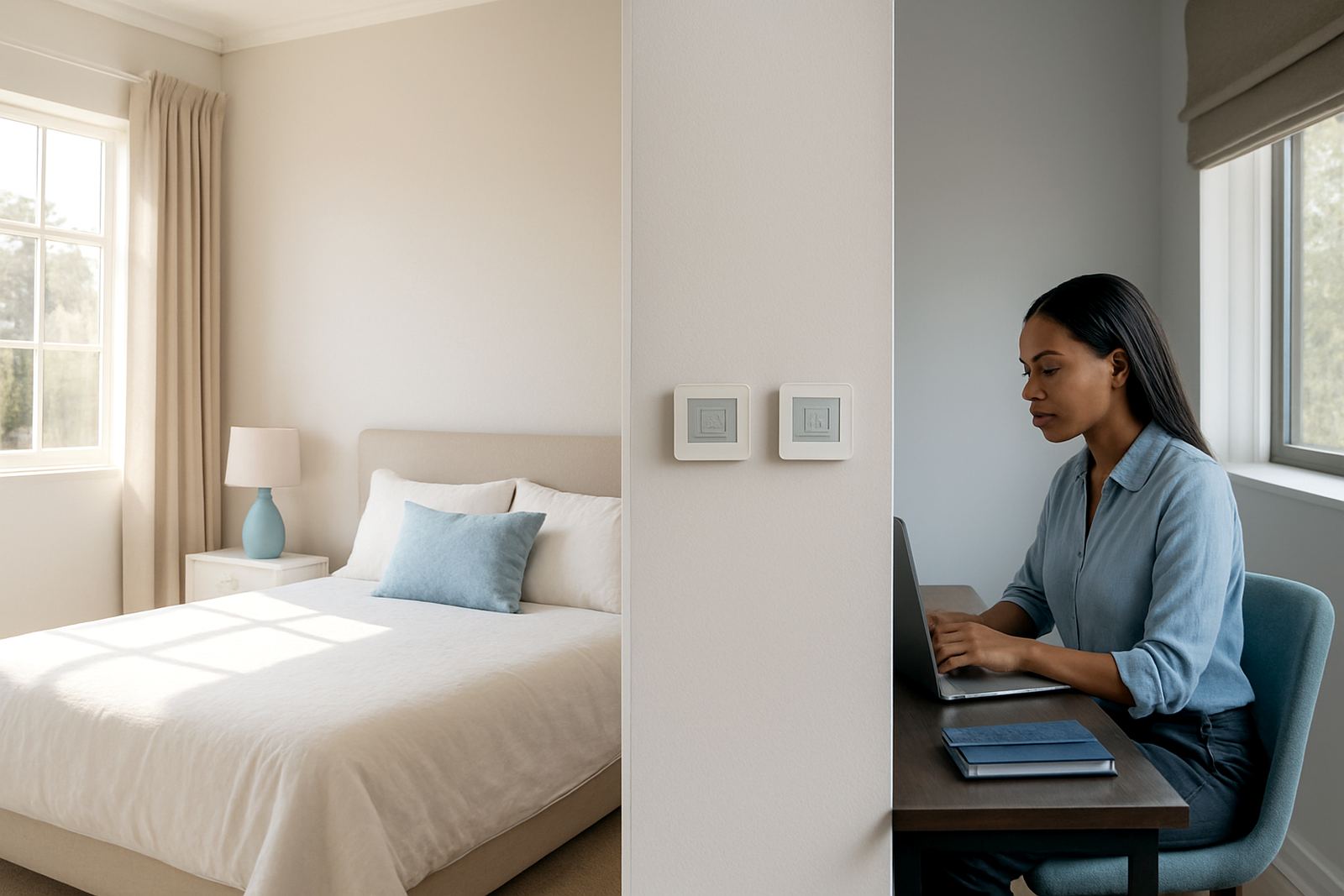
Airzone-style zoned systems depend on balance. Each room or group of rooms gets its own damper control, and the thermostats call for cooling based on actual use in that area. If the filters are clogged, the system cannot move air evenly through the ducts, so some zones will always seem slower to respond.
That matters in offices where one wing may be quiet while another has a full meeting schedule. Clean filters help the system respond to those changing loads without forcing the equipment to run longer than needed. They also support better airflow balancing, which is important after tenant changes, office re-layouts or new partitions. In Pretoria East, for example, we worked on a two-storey office where the boardroom and the west-facing admin wing were never matching up. The issue was not the thermostats at all. Once the filters were replaced and the air volumes checked, the temperature difference settled down quite a lot.
When the filters are left too long, the dampers can end up opening more than they should, and the system starts chasing a problem instead of solving it.
Practical intervals for Johannesburg and Pretoria offices
There is no single interval that suits every office. A professional suite with modest occupancy may manage with planned checks every quarter, while a larger open-plan office near Sandton traffic or a building with high footfall may need more regular attention. For sites with renovation dust, pets in ground-floor offices, or frequent open doors, the schedule should be tighter.
As a practical guide, many offices benefit from the following approach:
- Monthly visual check by building staff or facilities teams
- Quarterly filter inspection and change where needed
- Mid-year review after winter heating and dry-season dust
- Extra check after construction, office moves or smoke exposure
Coastal humidity is less of a factor in Johannesburg and Pretoria than in Durban or Cape Town, but moisture still matters where ceiling voids trap damp air after a leak or where the building is closed over weekends. In those cases, filters and ducts should be checked sooner, because moisture can lead to odours and extra strain on the system.
A local example from a busy Pretoria office
A Pretoria office with around 60 staff kept reporting that the west-side meeting rooms were warmer in the afternoon, while the main open area felt fine. The management team had already adjusted thermostat settings twice, but the complaint kept coming back. During the site visit, the filters were found to be heavily loaded with dust from nearby roadworks and the return air flow was down across the board.
After the filters were changed, the air handler cleaned, and the airflow checked room by room, the temperature spread dropped and the system stopped running as long in peak hours. The building manager also started logging filter condition and scheduled seasonal servicing before winter and again before summer. That small change made a clear difference to comfort and gave the facilities team a proper record to work from.
For offices in Johannesburg, Randburg, Centurion or Sandton, that is usually the pattern. A filter issue shows up first as a comfort complaint, then as a running cost problem if it is left too long.
Keeping maintenance tied to the rest of the system
Filter maintenance works best when it sits alongside the rest of the HVAC care plan. That means checking dampers, thermostats, controls programming and airflow balancing together, not as separate jobs done months apart. If a building has load-shedding backup arrangements, the air-conditioning should be checked after power interruptions too, because repeated stops and starts can expose weak filters and dirty coils faster than expected.
For office owners and managing agents, the easiest approach is to keep a simple maintenance log with dates, filter type, pressure readings if available, and any tenant complaints. That gives a clear history when a room is no longer cooling properly and helps avoid repeat callouts for the same fault. It also makes it easier to plan for seasonal peaks, especially when the first hot spell arrives and everyone switches the system on at once.
Well-timed filter maintenance is not complicated, but it is one of the most useful habits in an office building. It protects comfort, reduces unnecessary wear and keeps shared occupied zones feeling more even from morning to closing time.