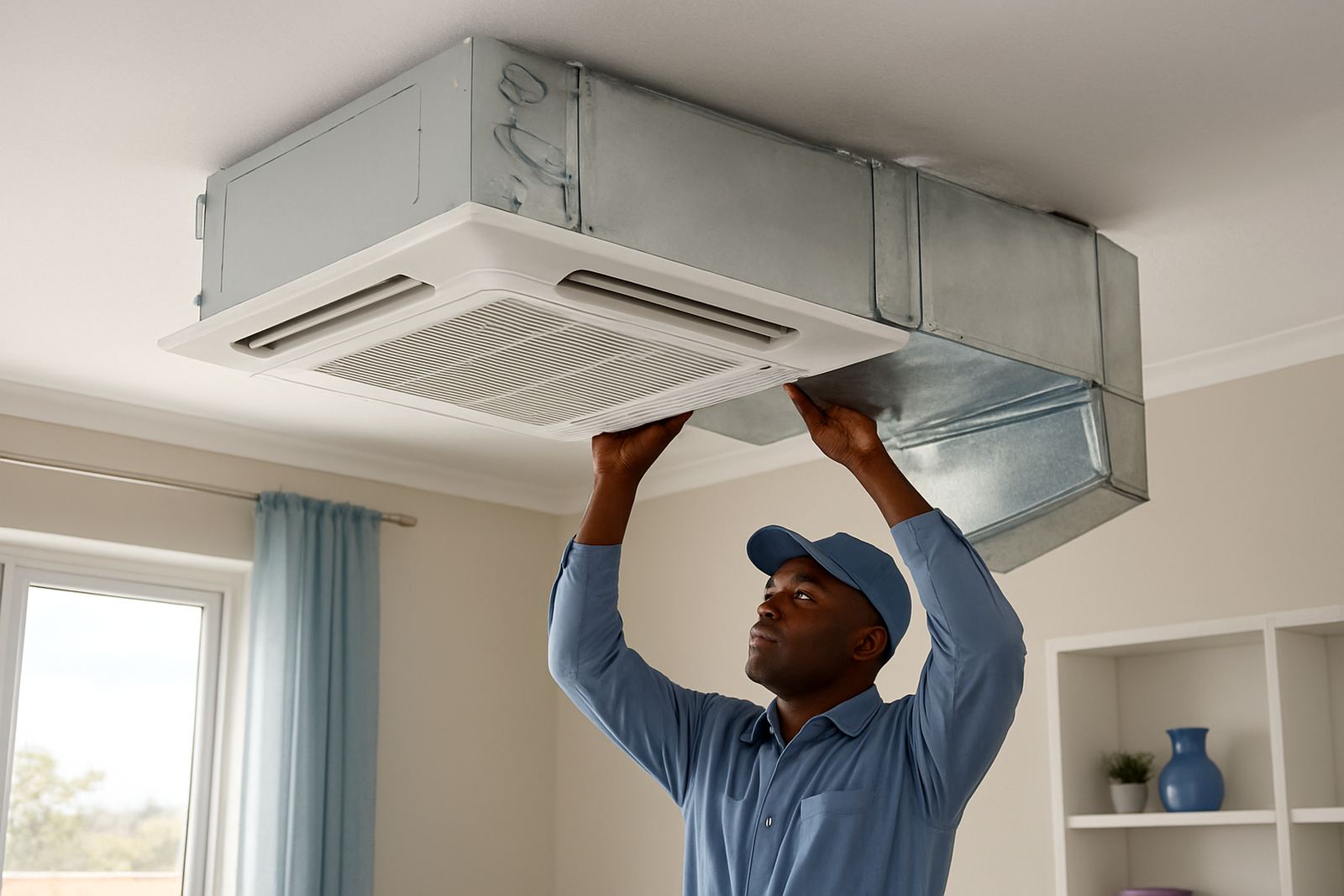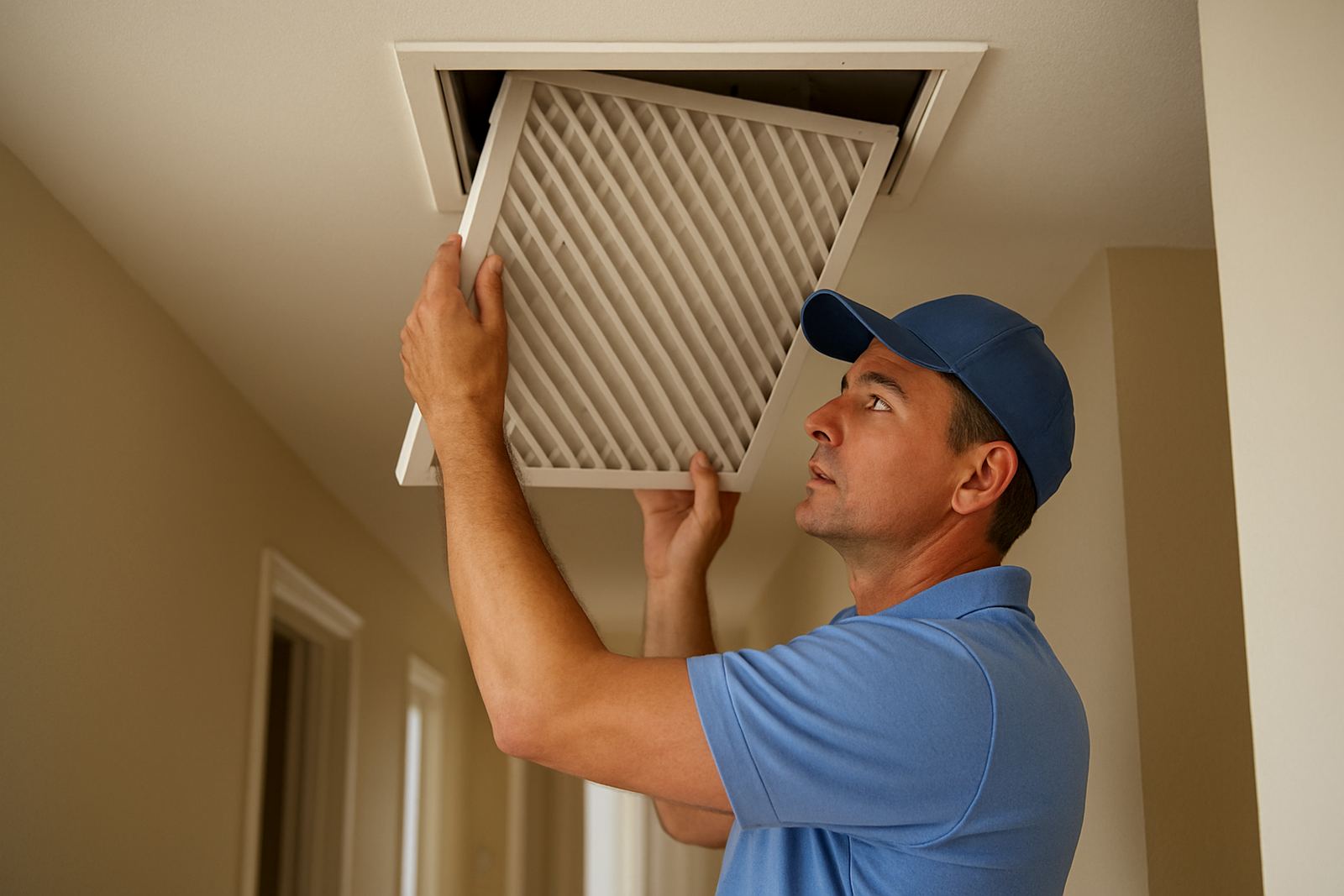
Why filter care matters in daily use
A filter is the first line of defence in a ducted air-conditioning system. It catches dust, hair, fine dirt and other particles before they travel through the unit and into the rooms. When a filter is clean, air passes through with less resistance, so the system does not have to work as hard to keep the house or office at the right temperature.
Once a filter starts loading up, airflow drops. You may notice weaker supply air, rooms that take longer to cool, or a system that runs for longer periods during hot afternoons in Sandton or Pretoria East. In some cases the unit can start icing, or the indoor fan can sound different because it is struggling against the blockage. That is why filter care is not just about cleanliness, it is about keeping the full system performing as intended.
For families and small offices, better filter care also means less dust settling on furniture and less strain on people with allergies. It is a simple routine, but it pays off every day.
How often to check filters in Gauteng homes and offices
There is no single rule that suits every building. A home near a busy road in Randburg will often need a different cleaning routine from an office in Centurion with fewer people and less outside dust. The practical approach is to check filters regularly and adjust based on use, pets, renovation work and seasonal conditions.
- Check monthly during heavy summer use.
- Check every 2 to 6 weeks if there are pets, smokers or lots of dust.
- Check more often after building work, sanding or painting.
- Check before the first strong heat of the season and again before winter heating starts.
- For offices, align checks with occupancy levels and meeting room use.
In many homes, a quick visual check is enough to tell if a filter needs attention. If you can see a layer of dust sitting across the surface, it is ready for cleaning or replacement. Do not wait until airflow has clearly dropped.
Simple filter care steps you can do at home
Most household filters can be looked after without special tools, but always switch the system off before opening any access panel. If the filter is reusable, remove it carefully and avoid shaking dust back into the room.
- Turn the system off at the thermostat and isolate power if needed.
- Open the access panel and remove the filter slowly.
- Vacuum loose dust from both sides with a soft brush attachment.
- If the filter is washable, rinse it gently with clean water and let it dry fully.
- Do not refit a damp filter, especially in humid coastal conditions or during summer rains.
- Check for tears, bent frames or clogged sections before reinstalling.
If the filter is disposable, replace it with the correct size and orientation. A filter fitted the wrong way can restrict airflow and reduce dust capture. When in doubt, take a photo before removing it so the direction is easy to remember later.
Signs the filter is affecting the system
People often notice a problem in the room before they think about the filter. The system may still switch on, but it will not perform the same way. That can lead to complaints in open-plan offices, bedrooms that feel stuffy by late afternoon, or a meeting room in Pretoria that never quite reaches the set temperature.
Watch for these common signs:
- Weaker air from the supply grilles.
- Longer run times to reach the set temperature.
- Dust collecting faster on surfaces.
- Unusual fan noise or a light whistling sound.
- Rooms that feel uneven, with one area warmer than the rest.
- Higher electricity use without a clear reason.
These symptoms do not always mean the filter is the only issue, but it is one of the first things to check. If a clean filter does not restore normal airflow, there may be a deeper problem with ducting, dampers or the thermostat setting.
A local example from a Pretoria family home
A family in Pretoria East contacted us after noticing that the main bedroom and upstairs study were cooling more slowly than the lounge. The system was still running, but the rooms felt muggy late in the afternoon. When the return air filter was opened, it had a heavy layer of dust from recent road works nearby and the winter pollen cycle.
After cleaning the filter and checking the airflow balance, the system recovered quickly. The family had also been closing a few supply grilles during the day, thinking it would save energy, but that made the pressure issues worse. Once the filter was cleaned and the grilles were left as designed, the rooms settled back to normal.
That kind of case is common. A filter can look like a small part, but in a zoned system it has a direct effect on every room downstream.
When filter care is not enough
Sometimes a filter is clean but the system still struggles. In those cases the issue may sit elsewhere in the installation. Damper positions, duct leaks, weak return air, poor thermostat placement or incorrect refrigerant performance can all affect comfort. A filter cannot fix those faults on its own.
It is worth getting professional help if you notice any of the following:
- The filter gets dirty again very quickly.
- There is mould smell, visible dust blowback or water marks near the unit.
- One zone is always too hot or too cold.
- The system trips, freezes up or makes repeated noise during start-up.
- You have recently renovated, added rooms or changed occupancy.
For homes and offices in Johannesburg and Pretoria, seasonal servicing is usually the best time to check filters, test controls and confirm that the full system is moving air as it should. That helps avoid bigger repairs later on.
},{