Why condensate drainage fails in real buildings
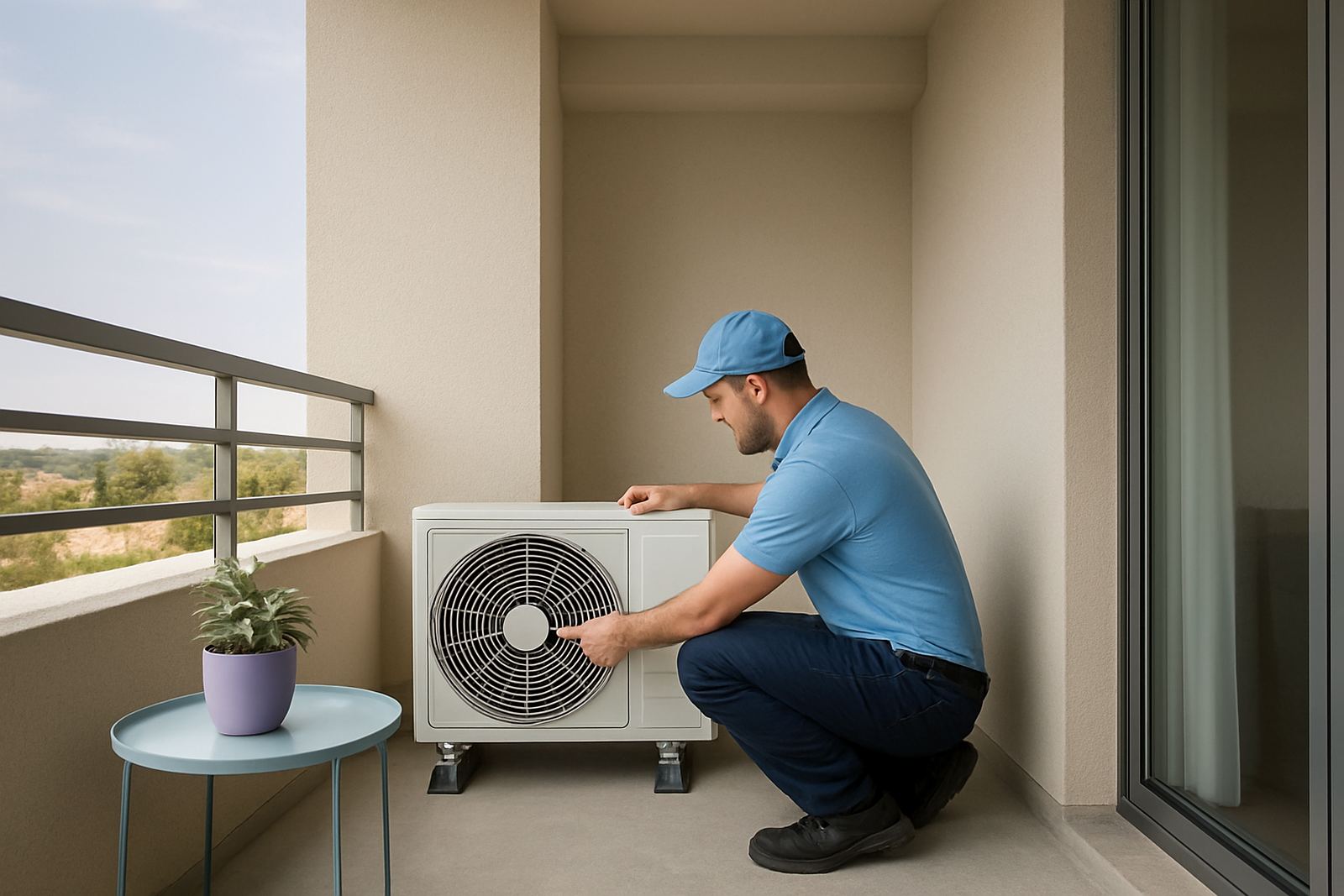
Every air-conditioning system pulls moisture out of the air, then sends that water away through a drain line, trap, pump or gravity fall. When that path is blocked, undersized or poorly installed, water stays where it should not be. In homes and offices around Johannesburg and Pretoria, the first complaints are often small. A drip near a unit, a damp patch on a bulkhead, or a faint smell after the system has been running for an hour.
Condensate problems are common where units were fitted quickly, where the drain run was not tested properly, or where building movement has pulled a pipe joint loose. In older properties, dust buildup, algae and sludge can slowly choke the line. In new builds, bad falls and hidden bends can cause the same issue, sometimes after only one season. A drainage fault is not just an annoyance, it can damage paint, gypsum ceilings and electrical components if left long enough.
Early signs you can see before the damage gets worse
Some warning signs are obvious, others are easy to ignore until water starts marking the ceiling. The trick is to watch for change. If a unit that used to run quietly now drips intermittently, or the room feels damp even when the temperature is fine, take it seriously. Offices often notice the problem first in the mornings when the system starts up, while homes may only see it after a hot humid afternoon.
- Water dripping from the indoor unit or from the ceiling below it
- Brown, yellow or grey stains around ceiling boards or wall corners
- A musty smell near the unit or in adjacent rooms
- Visible algae, dirt or slime around the drain outlet
- Unexpected shutdowns if a float switch or safety tray fills
- Gurgling sounds from the drain line during operation
If you see more than one of these signs, the issue may be more than a simple blockage. Poor pipe slope, a failed condensate pump or a cracked tray can all look similar at first. That is why a proper inspection matters, not just a quick wipe down.
What the room is trying to tell you
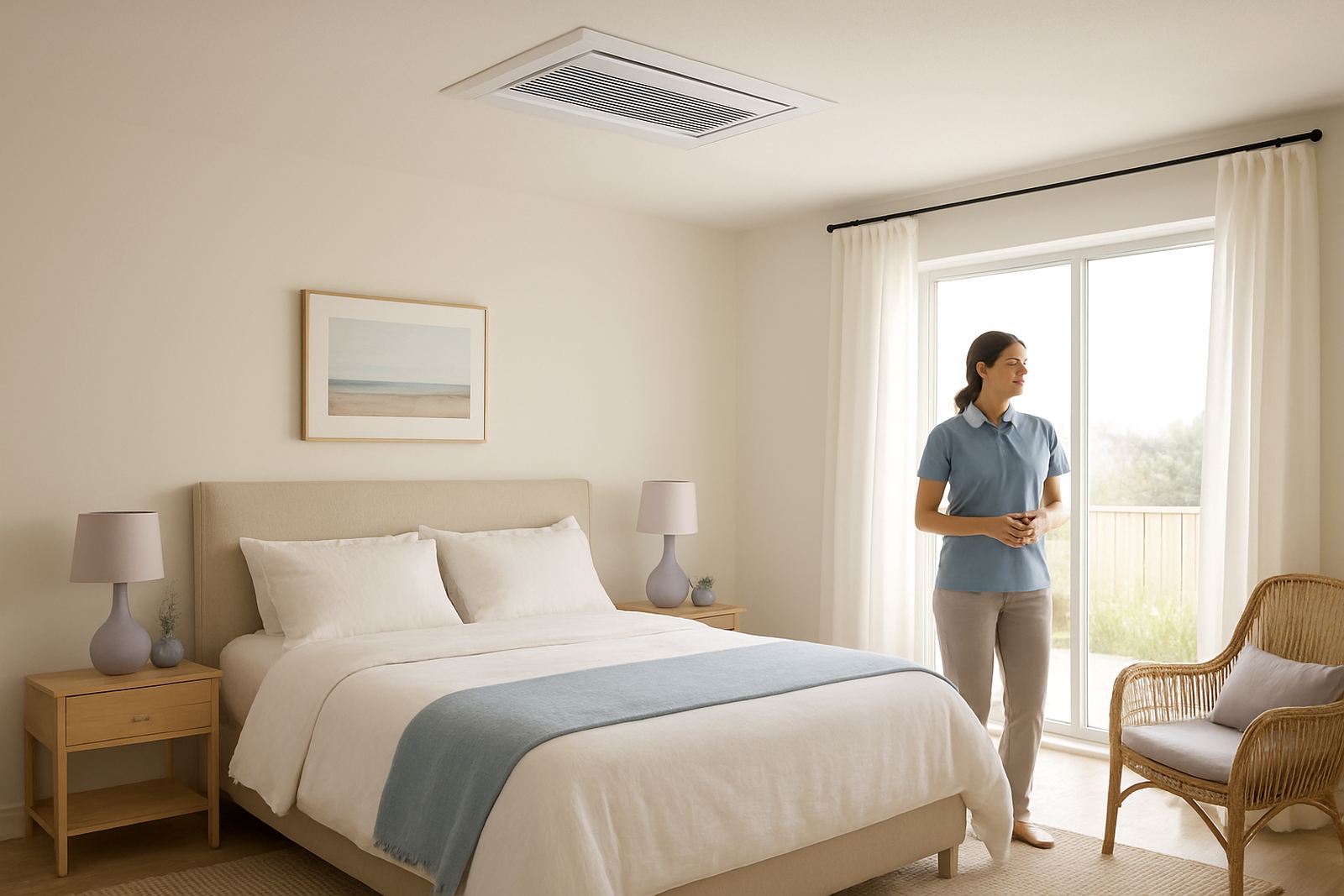
Condensate issues often show up in the space around the unit before they show up at the unit itself. On a ceiling cassette or concealed ducted system, the first clue may be a swelling plaster joint or paint that starts to bubble after a few cooling cycles. In a boardroom, you may notice paper curling on a credenza, but the real cause is water collecting above the ceiling.
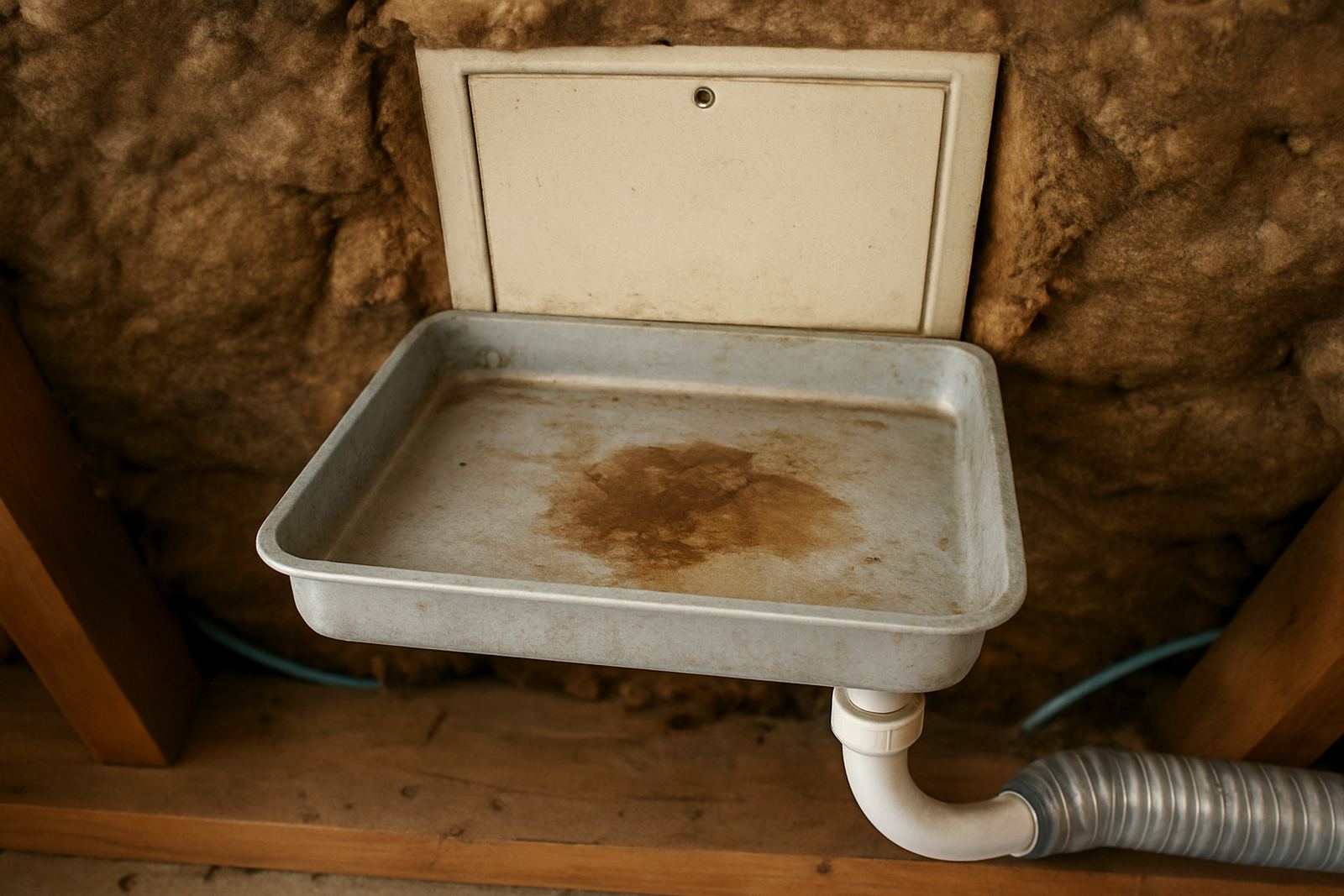
Listen to the building as well. A drain line that is partially blocked can make a sloshing or gurgling sound. A condensate pump may cycle more often than it should. If the system smells sour every time it starts, that usually points to standing water in the drain pan or trap. In coastal areas the problem can be worse because salty, humid air keeps pipework damp for longer, which helps grime and algae build up faster.
- Check for new stains after heavy system use or after a very humid day
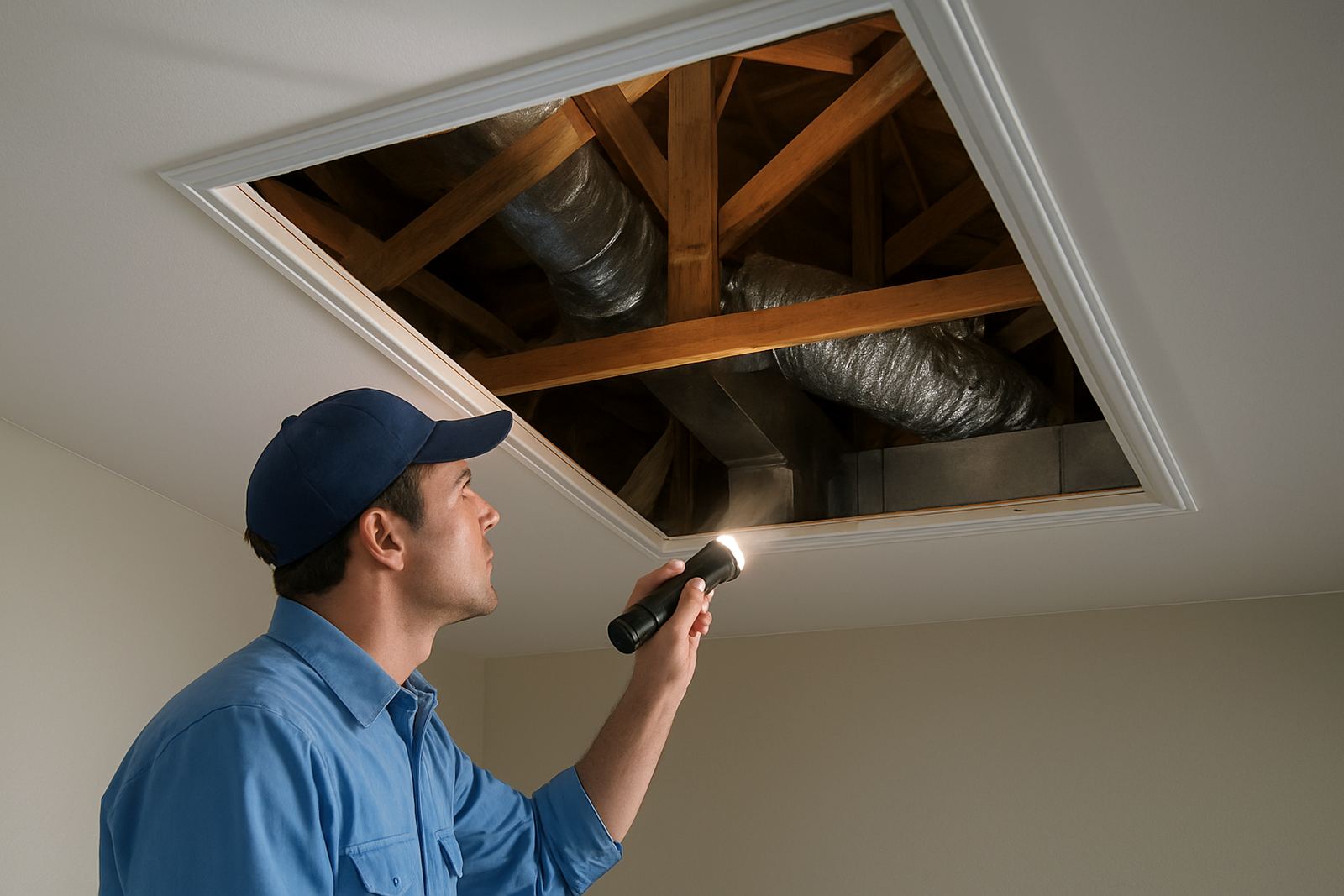
- Look inside accessible ceiling spaces for drips, loose pipes or wet insulation
- Ask occupants whether the smell appears only when the aircon is on
- Watch for floors that become slippery near service access points
Why load shedding and long downtime can make it worse
When a system stops and starts often, condensate flow can become inconsistent. After a load shedding cycle, warm humid air enters the building, then the unit works hard to pull out that moisture once power returns. If the drain line is already weak, the extra water can expose the fault. Pumps may also struggle if power returns before the unit has fully reset.
In offices, downtime tends to be noticed quickly because temperature and humidity affect staff comfort and equipment. In homes, the warning often comes later when a ceiling patch starts to sag or a cupboard has a damp smell. Either way, repeated stoppages can turn a minor drainage concern into a repair that affects both the air-conditioning and the building fabric. It is far cheaper to sort the drain than to replace soaked ceiling boards or damaged insulation.
A Pretoria East example that could have been a ceiling repair
In Pretoria East, a small office reported a faint smell from a corridor ceiling on Monday mornings. The unit was still cooling, so the staff ignored it for a week or two. By the time the ceiling tile started to stain, the drain line was already partially blocked by sludge and dust, and the condensate pump had been overworking for months.
Once the line was cleared and the pump checked, the cooling issue disappeared but the ceiling damage still had to be repaired. The client later said the first sign was not water at all, it was the smell after a weekend. That is a common pattern in offices and homes alike: the building gives you a warning before it gives you a failure. Catching it early would have saved both time and money, no question.
How Airzone checks and prevents drainage faults
A proper drainage inspection should look at the whole path, not only the indoor unit. That means checking the drain pan, trap, pipe slope, joints, pump operation and overflow protection. On ducted systems, we also look at access points, insulation and airflow balance, because poor air distribution can affect how moisture forms and moves through the unit.
For Johannesburg and Pretoria properties, especially in Sandton, Randburg, Centurion and Pretoria South, regular servicing is worth planning before summer starts. A good service can include:
- Clearing and flushing condensate lines
- Testing pump operation and float switches
- Checking drain fall and pipe supports
- Inspecting trays for cracks or corrosion
- Confirming the unit is not overflowing under peak load
If you are fitting a new system or upgrading an older one, correct design matters from day one. A unit that is sized properly, balanced correctly and installed with the right drain route is far less likely to cause trouble later. That applies just as much in a family home in Randburg as it does in an office block in Centurion.